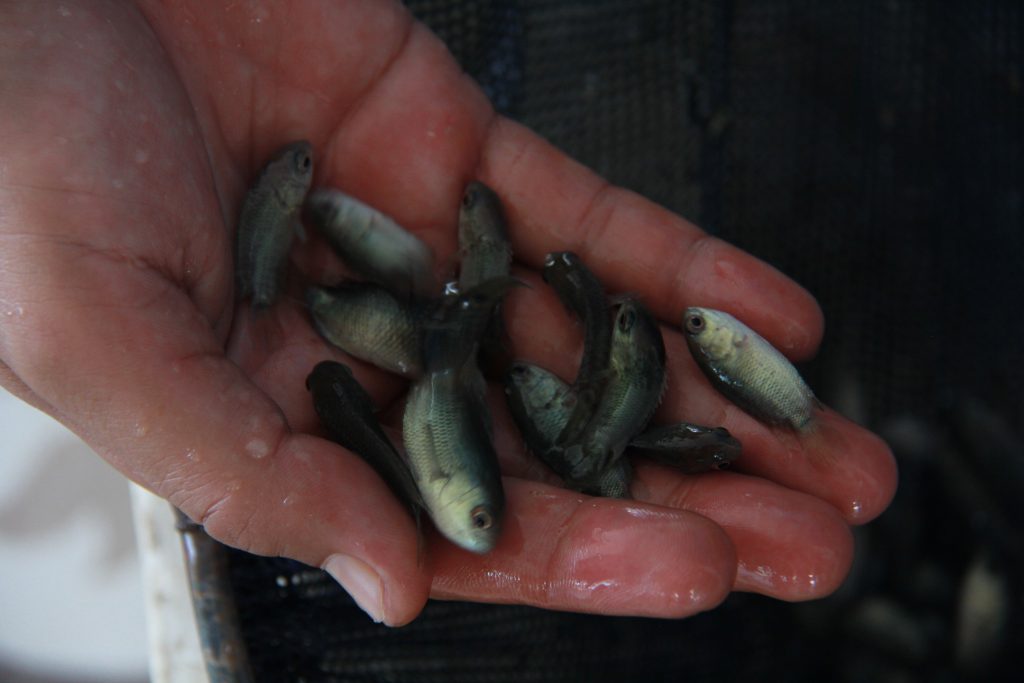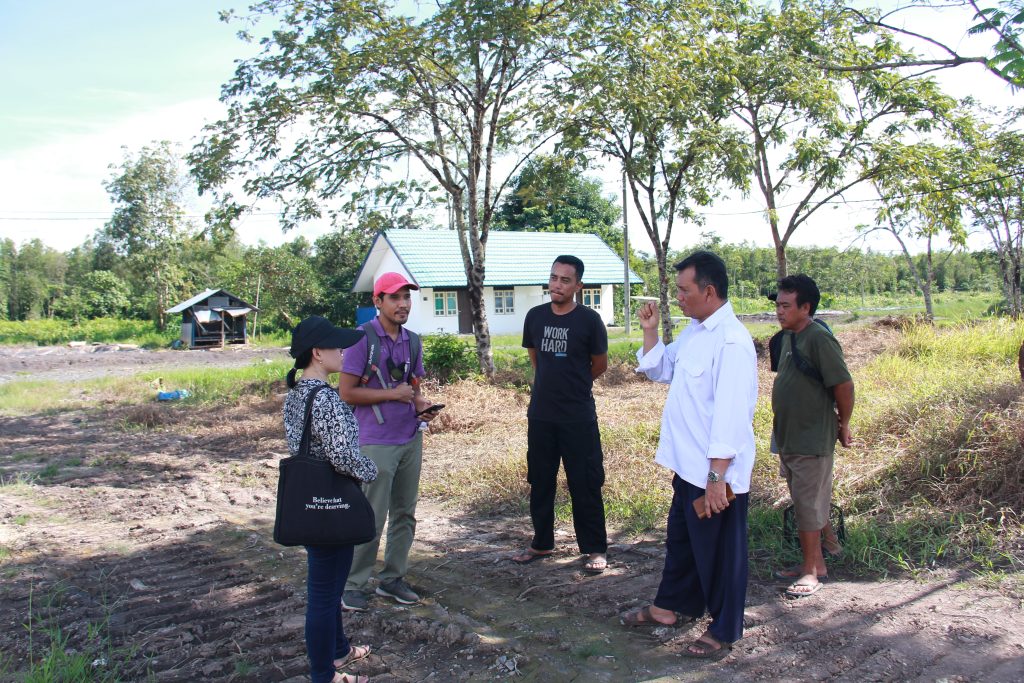


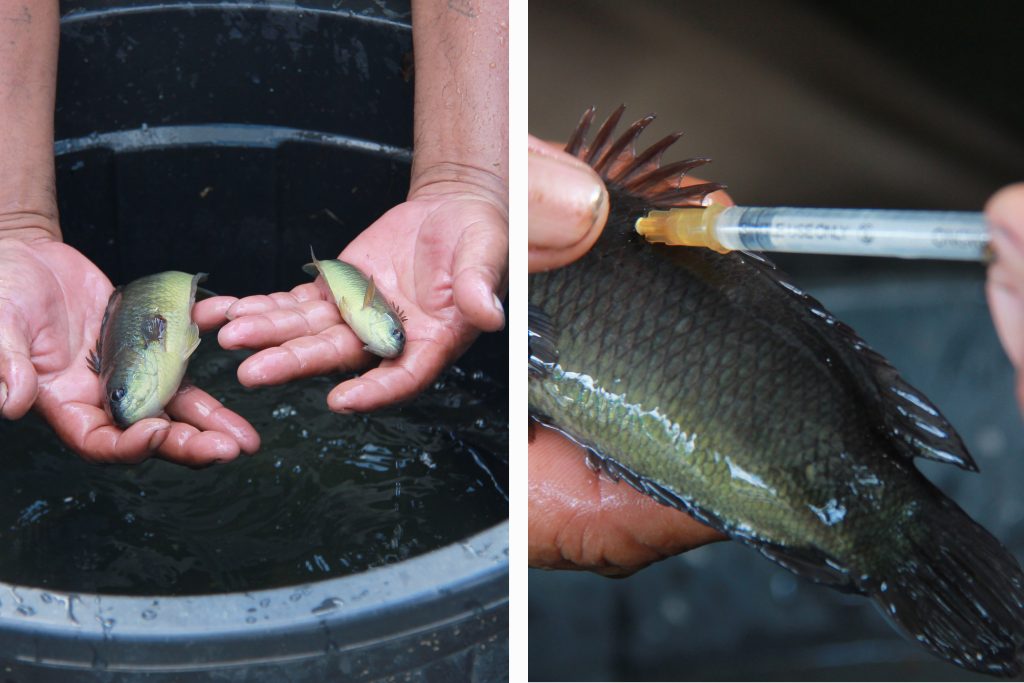
Climbing perch (Anabas testudineus), known locally as papuyu is a hardy fish found in peatlands that can survive out of water for six to ten hours, using a lung-like organ in their head to breathe air. It can also crawl on land using its pectoral fins. Our team followed a lead about a place in Garung village, where this fish is raised. We realized that it was right across the street from the rubber factory where the rubber farmers of the livelihood program in Pilang sell their product. The facility is called IBILAGA, which is an acronym that means Aquaculture Facility for Peat Water Fish. There we met with the coordinator, Pak Juliansyah, who kindly gave us a tour.
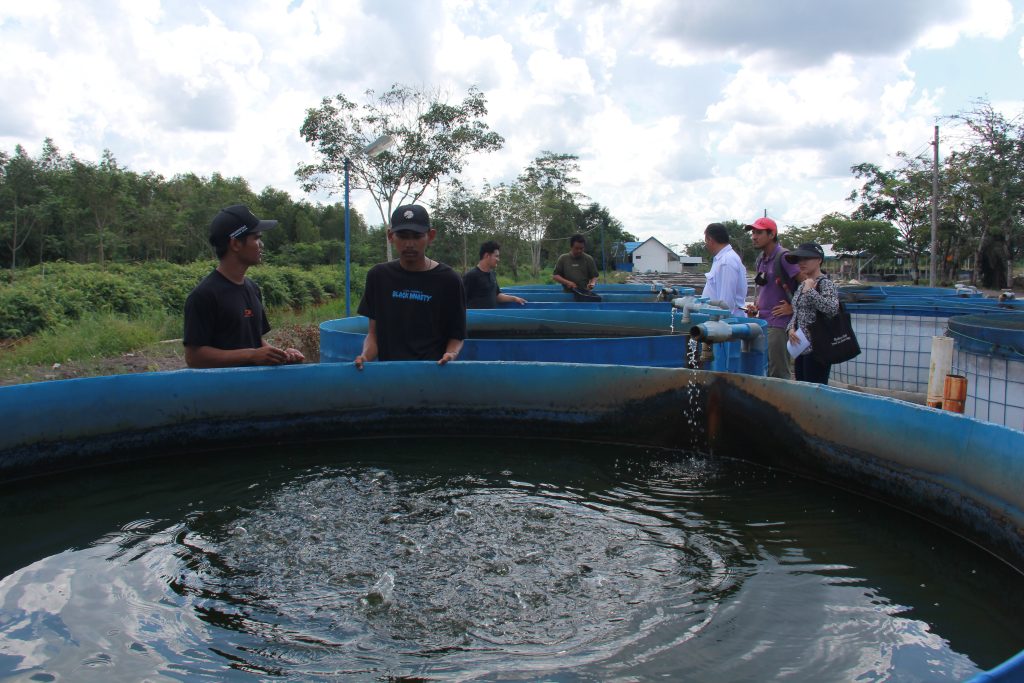
IBILAGA is a government project under the Ministry of Maritime Affairs and Fisheries. The facility was established in 2008 and is supervised by the Office for Cultivation of Freshwater Fish in Mandiangin, Banjar. They currently raise three types of fish: patin, papuyu and snakehead (gabus), which are sold to the public as juveniles, broodstock and mature fish for consumption. The income from these sales becomes government revenue. For the juveniles, they have an annual quota of a million fish to distribute free of charge to communities that need them and also to restock wild populations. For example, they sent 22,000 gabus juveniles to Kasongan the day after we visited the place. At any given time there would be approximately 500,000 living fish in the facility.

A Research Facility

The main focus of this project is to develop the freshwater fish industry in Central Kalimantan. Pak Juliansyah thinks that the industry is lacking, if compared to that of South Kalimantan. He explains that “The people don’t want to raise gabus or papuyu because it takes a long time. So, one of our objectives is to shorten its growing time”, which they did for patin, from seven-eight months to four months. They do this by experimenting with three factors: the feed, the genetic stock and the environment. Another factor is the feed conversion ratio, which is 1.7:1 for the peat water fish, gabus and papuyu. This means if, for example, you want a weight increase of 100 g, you need 170 g of feed. With a shorter growing time to reach a certain weight, it would appeal more to fish farmers, because they would get more returns.

The Challenge of Peat Water
Peat water is naturally acidic, with a pH of 3-4, and has low levels of oxygen. Although papuyu can live in that extreme condition, Pak Juliansyah is not sure if that environment is conducive to its growth. Last year we visited a similar aquaculture facility in Bukit Batu that also raises gabus and papuyu to restock wild populations (link to article). The main difference in IBILAGA is that the fish are conditioned to live in water which has a pH close to neutral, which would have sufficient oxygen levels. Fish are known to eat less when there is not enough oxygen, and if they don’t eat, they don’t grow. So, to eliminate this risk, they added lime to the water in IBILAGA to raise its pH. The disadvantage is that these fish might not survive if they are released in peatland, since they are used to a pH of 5-6. In the case of a fish farm in Mentaren, Pulang Pisau there was an intrusion of peat water in the fish ponds, so they added lime for it to reach a suitable pH.

Pak Juliansyah strives to keep developing Central Kalimantan’s fisheries so that it can compete with the one in South Kalimantan. He believes it has great potential, since Central Kalimantan has plenty of water and a lot of land.