



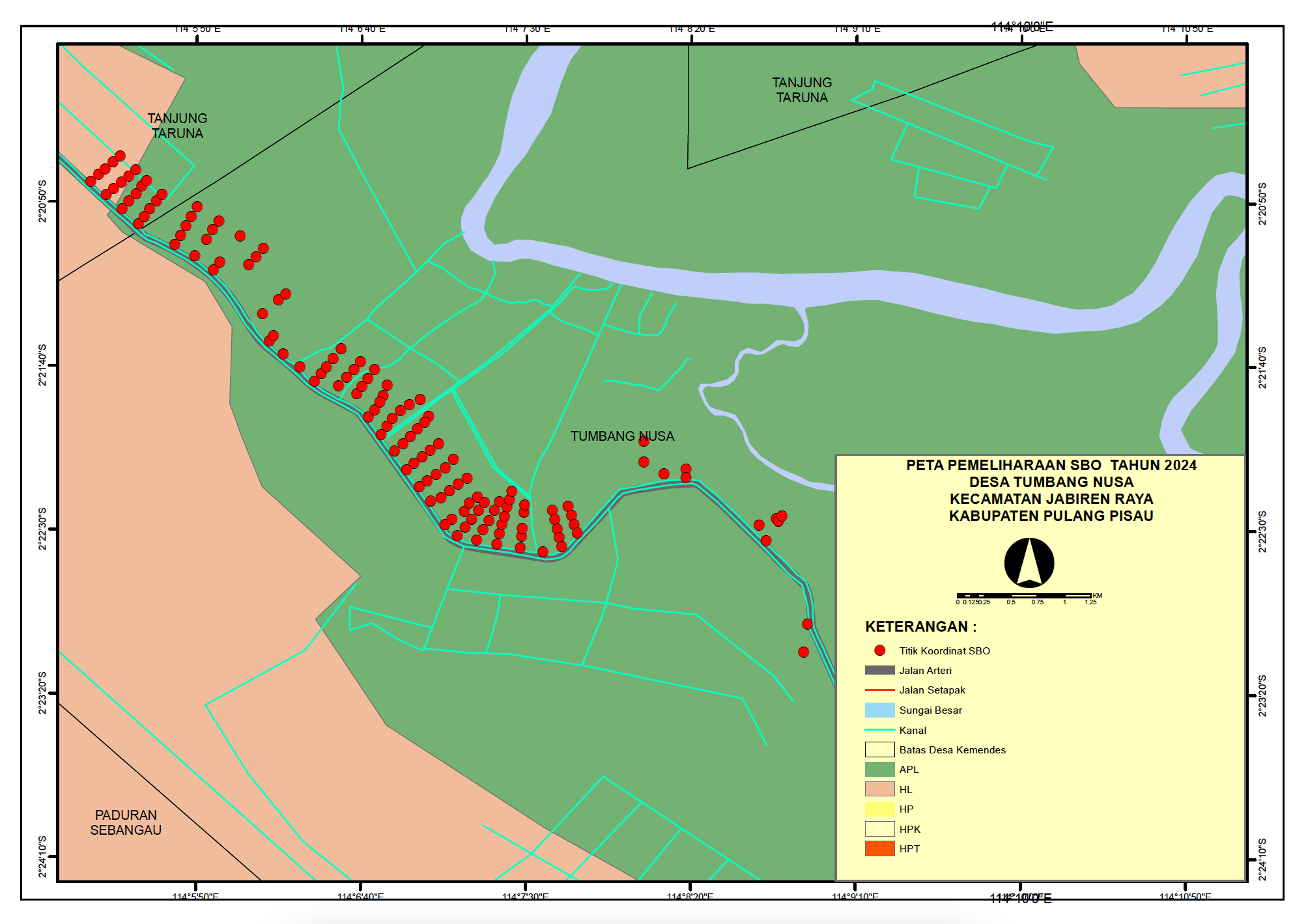
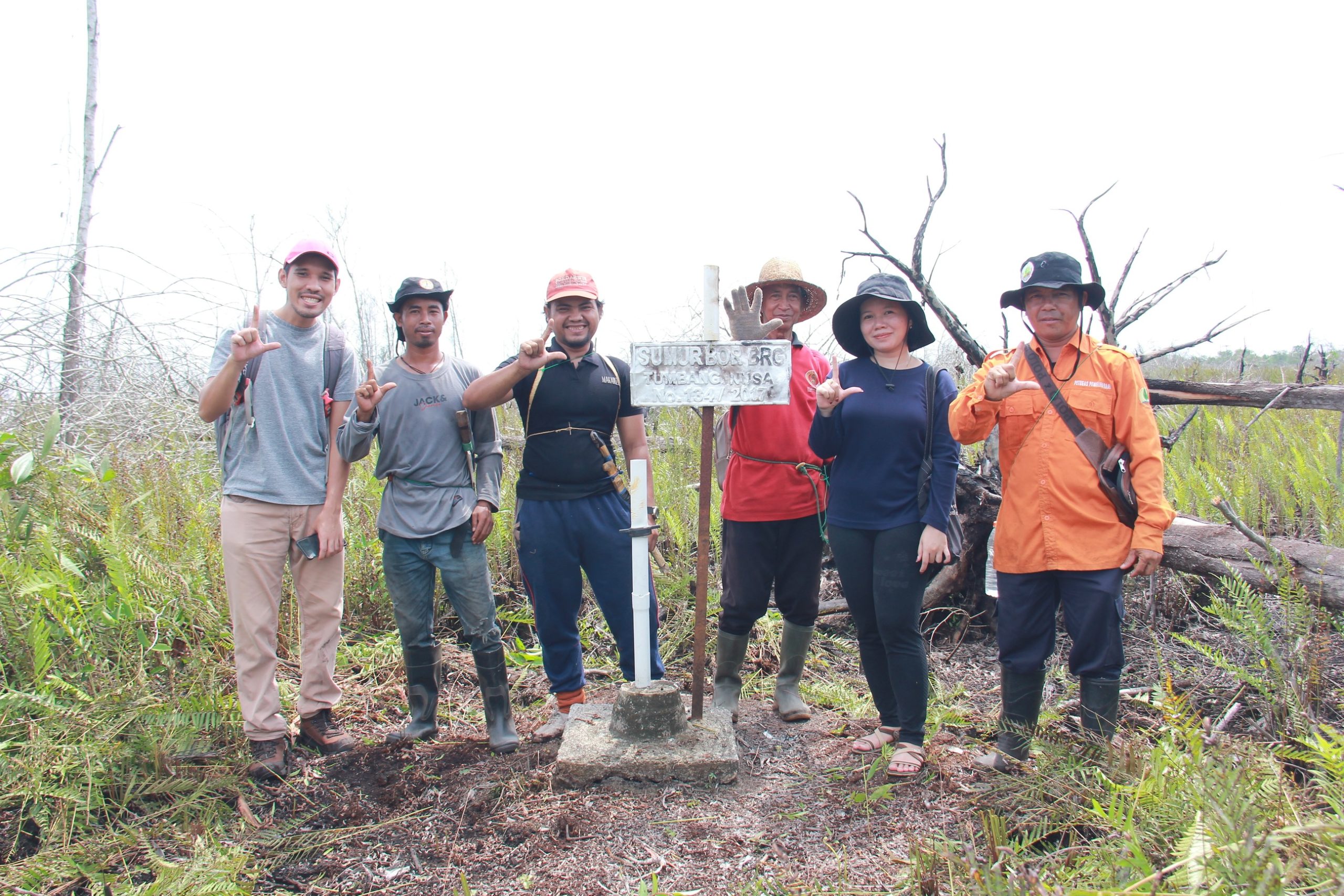
It was in March that we first contacted Pak Silpanus, the head of the volunteer firefighters in the village of Tumbang Nusa, to make arrangements to interview him on site. Unfortunately, flooding in the area made it difficult to access the village. So, in the meantime, we pursued other stories until we contacted him again in August. He agreed to meet us at 9 AM at their guardpost in Tumbang Nusa. When we got there, they were about to do maintenance on the borewells that were spread in the peatland. We didn’t expect to be walking in peat, and weren’t dressed accordingly, but we took that opportunity to see for ourselves their efforts to prevent fires in the area.
Checking The Borewells
Lacking Proper Equipment
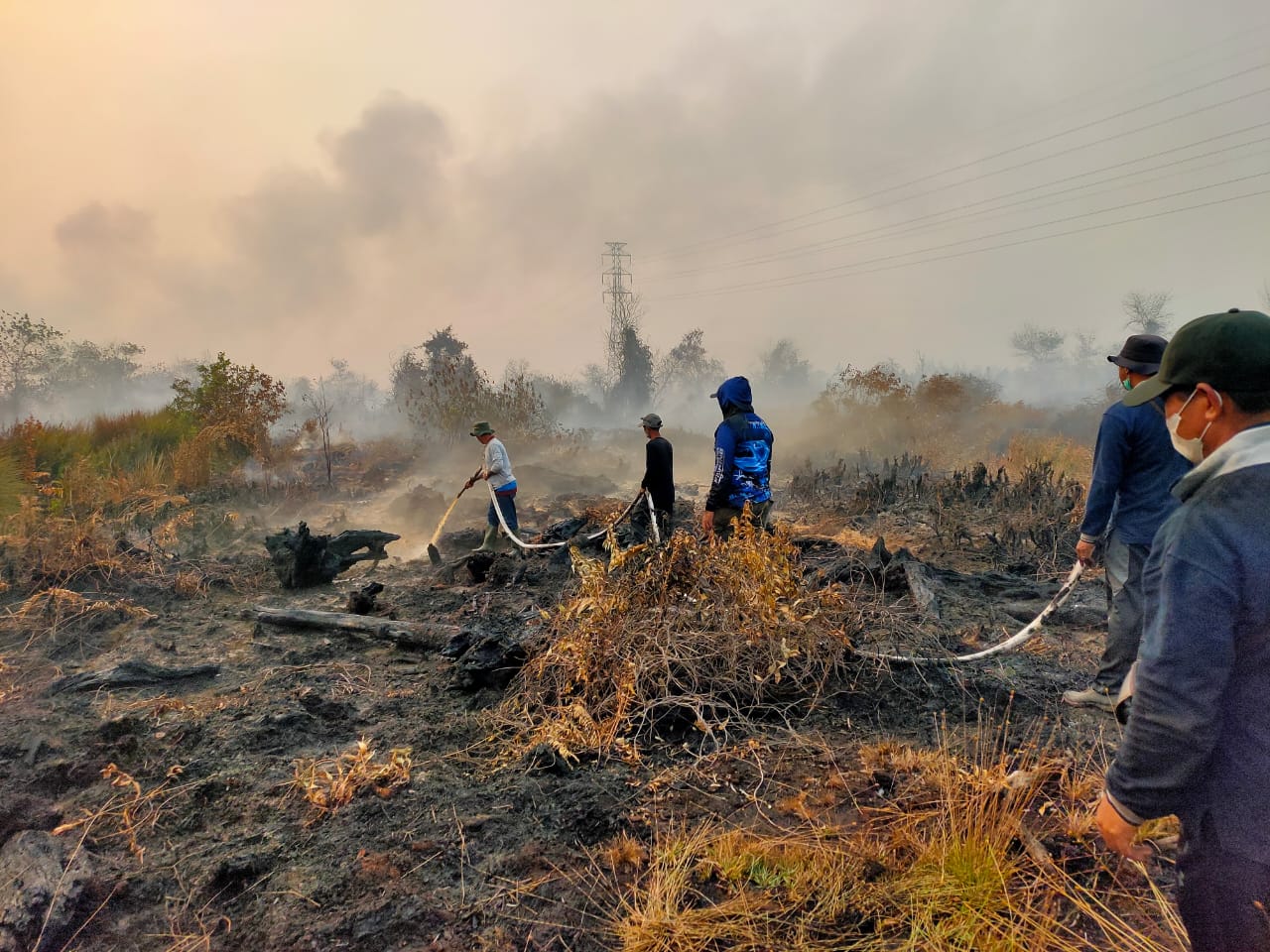
We passed by many charred tree trunks from the fire in September-October 2023. For Pak Silpanus, that was the worst fire they had ever encountered since they became MPA. It lasted for 25 days, burning an area of 240 ha. When a fire occurs on peatland it often spreads to the peat underneath and becomes harder to extinguish. The peat can smolder for days, releasing toxic smoke. The source of the fire was 1600 m inland and far from any water sources. The Perintis MPA and firefighters from Manggala Agni, the national fire fighting brigade, and the Regional Disaster Management Agency (BPBD) joined forces to put out this fire. When the MPA cannot handle a fire on their own, firefighters from either of the two organizations above, who are better equipped, come to help. Even though they receive funding from the village and the BPBD and BRGM support them by providing fuel and daily wages, albeit not regularly, the Perintis MPA are by all rights ill-equipped to fight fires. Most of their equipment is in need of repair or replacement and they don’t have proper transportation. When there is a fire, they carry the heavy gear, such as a pump and a fire hose, on their own motorbikes to its location. “Our main constraint is money. If we had the funds, we would get proper equipment to support our activities”, says Pak Silpanus. They get by with what they have, sometimes using their own money to pay for the MPA’s expenses. Most of them earn a living by fishing, farming and doing odd jobs. They spare time, when they can, to carry out MPA activities.
Fire Safety On Peatland
After walking on peat for about 500 meters in the late morning heat, we had reached our limit and headed back to the guardpost, where we would wait for them. The team came back an hour later, three people on each motorbike, and we continued the interview. Altogether, they had finished checking 22 borewells that morning and would continue again in the afternoon. Each day they have a target of 30 borewells. When they have checked all of them, they submit a report to BRGM, who then pays them Rp100,000 for each well that is checked. Another aspect of their job is to do socialization to the public on fire safety on peatland. From the guardpost they can see all the people who come in and out of the village. When they see visitors that come to fish in the area, they implore them not to make any fires. In many cases, fires break out because people fishing in the area start fires to cook what they caught on the spot and to repel mosquitos, as well as the stray cigarette still burning. According to Pak Silpanus, nobody intentionally burns peatland. They are just careless and unaware of how easily peat can catch fire, which is why socialization is very important.
References
- YTS (2021) Mapping of Hydrological Peat Units (KHG) in Jabiren Raya Subdistrict
- Sakuntaladewi, N., Mendham, D.S., Subarudi, Rochmayanto, Y., Jalilov, S.M, Djaenudin, D., Effendi R., Astana, S., Wibowo, A. Vulnerability of communities living on peatlands to climate change and peatland degradation: A case study in Tumbang Nusa Village, Central Kalimantan, Indonesia. Mires and Peat, Volume 30 (2024), Article 05, 18 pp., http://www.mires-and-peat.net/, ISSN 1819-754X International Mire Conservation Group and International Peatland Society, DOI: 10.19189/MaP.2023.OMB.Sc.2118578
- Ministry of the Environment and Forestry (2018) PPID, accessed 25 August 2024, https://ppid.menlhk.go.id/siaran_pers/browse/1425