


As we know it, the world is in an environmental and social crisis. Economic growth, while essential to humanity, cannot continue in the usual sense without considering the environmental and social implications. A model that promotes both economic growth and restoration of the environment and its ecosystem is called a restorative economy. That is what PT Rimba Makmur Utama (RMU) is developing in the Katingan Mentaya Project. RMU has a partnership with each of the 39 villages that surround the project area. It helps develop the village communities by empowering them to take responsibility in restoring the peatland in their respective areas in a way that benefits them.
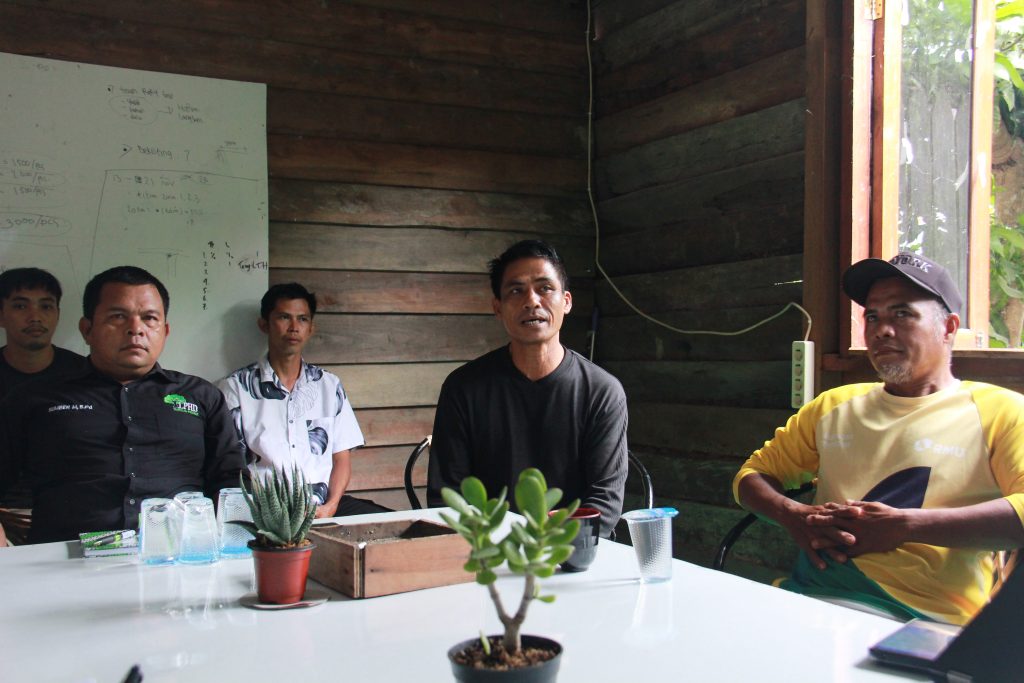
We heard that RMU was building a facility that produces albumin from ikan gabus (Channa sp.) or snakehead fish that thrive in peat swamps. So, after corresponding with them, we decided to pay a visit to the site. From Palangka Raya, we drove to the wharf on Kereng Pakahi, where they picked us up with their speedboat. After 40 minutes, going down the Katingan River, we arrived at the village of Tampelas in the late morning, warmly greeted by Pak Sumber the head of the social forestry group and Pak Juli, the former village head. Both of them played a key role in the origins of this project.
An integrated approach
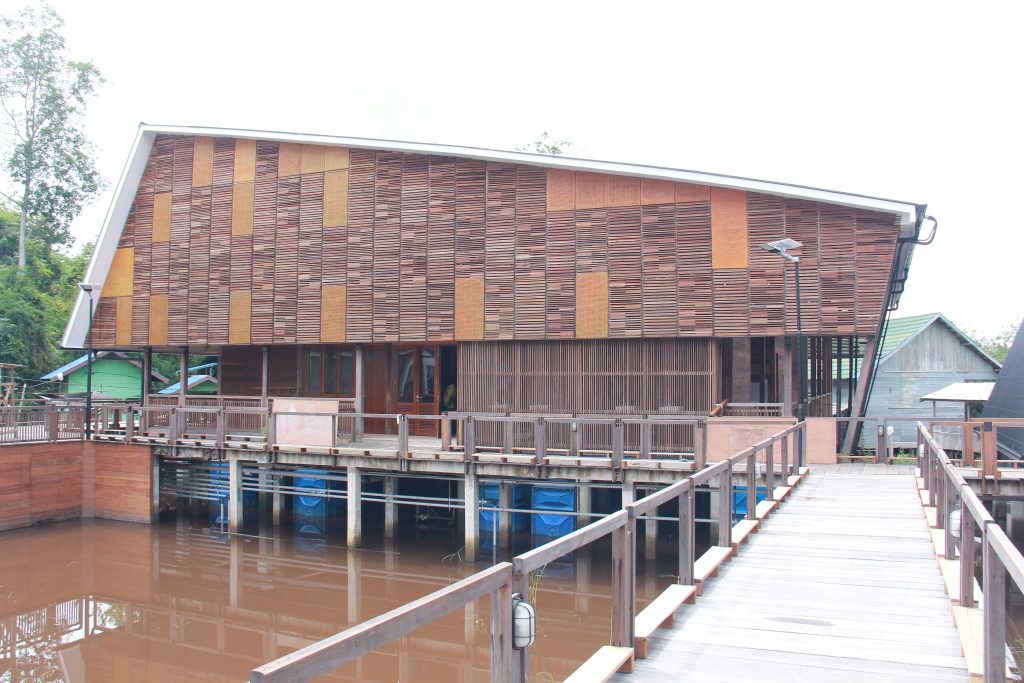
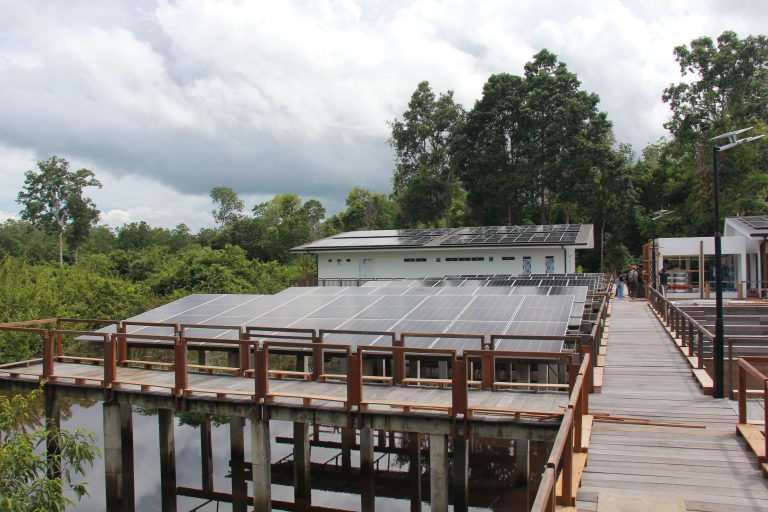
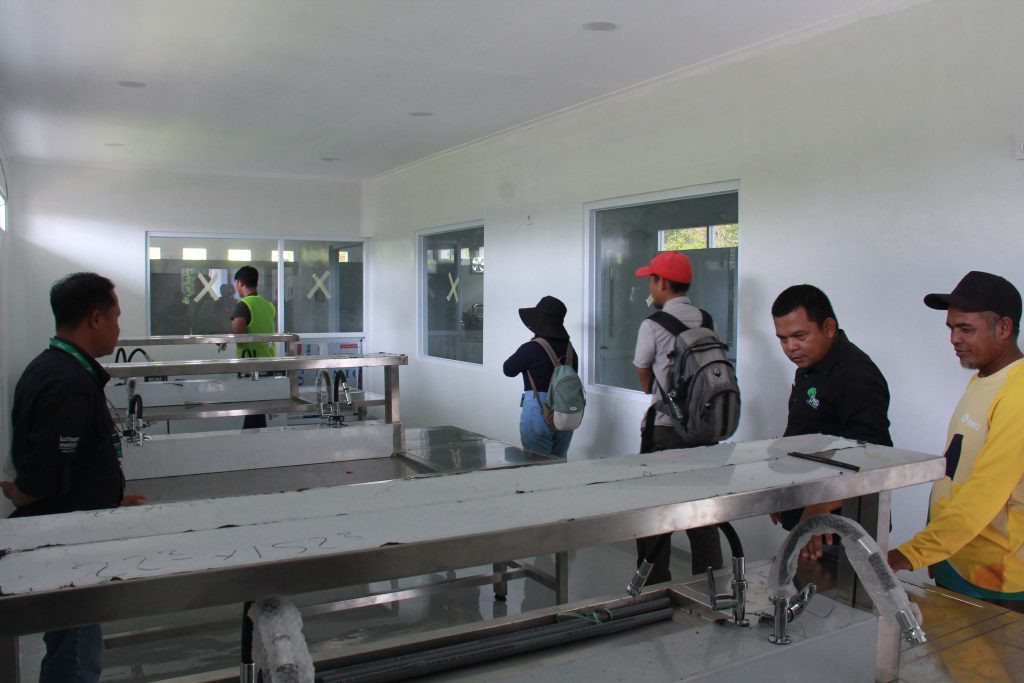
The project in Tampelas is ambitious and pioneering. Planning started in 2021, and the construction is 90% complete. We learned that they are building other facilities which both support the albumin production and address the basic needs of the community. Tampelas is not connected to the national electrical grid, so they depend on a diesel-powered generator for lighting at night. RMU partnered with PT. Arya Watala Capital to build a solar power plant that will power the albumin processing facility. The surplus electricity will be accessible to the community. A water treatment facility that uses water from the river and rainwater will be installed to provide distilled water for processing albumin. The treated water will also be distributed to the community. They are also building a function hall that will provide the people a space to hold ceremonies and events, as well as shelter when flooding occurs, which happens every year. In addition, there are auxiliary facilities for accommodation and waste management.
Precious albumin
The idea to produce albumin from snakehead fish came from the community itself. Albumin is an essential protein found in blood that has several functions, including accelerating the healing process of wounds, and carrying hormones, vitamins, drugs, and minerals throughout the body. It is usually taken as a supplement by women who have just given birth. This practice actually was done by the villagers’ ancestors, where they would consume more snakehead fish after giving birth. Two facts led to the idea of producing albumin: its price ranges from 1-2 million rupiah per kilogram, and there is an abundance of snakehead fish in Tampelas. The main livelihood in Tampelas is fishing and their monthly catch can reach two tons. Take a 500 g snakehead fish, process it, and you’d get 5 g of albumin. The remains would be processed into various fish products like fish cake and crackers. This livelihood is not only environmentally sustainable, but will also have a good return on investment.
To protect the peatland
And what does this have to do with peatlands? In 1980-1995, Tampelas had one of the largest numbers of illegal loggers in Katingan District, and Pak Sumber was one of them. The area where they felled trees borders the Sebangau National Park to the east. Even as a logger, Pak Sumber doubted he could continue this livelihood indefinitely. As if to confirm his doubt, in 2005, Susilo Bambang Yudhoyono ordered a crackdown on all illegal logging in Indonesia, implemented by the police and military. There was no more logging in Tampelas, and many people left the village to find other work. Those who stayed raised cattle, collected wild honey and caught fish. They believed that nature could provide for them, and looked for a way to protect the peat swamp forest around their village. They also wanted to halt the expansion of a 2,790 ha oil palm concession owned by PT Arjuna Utama Sawit1. During 2016-2019, with the help of RMU, Yayasan Puter Indonesia and USAID Lestari, Pak Sumber and Pak Juli took the necessary steps to establish a community forest in Tampelas, which spans 6,303 ha. They did a survey of its biodiversity, and measured the carbon stock of the peat, which is 25,515 ton/ha.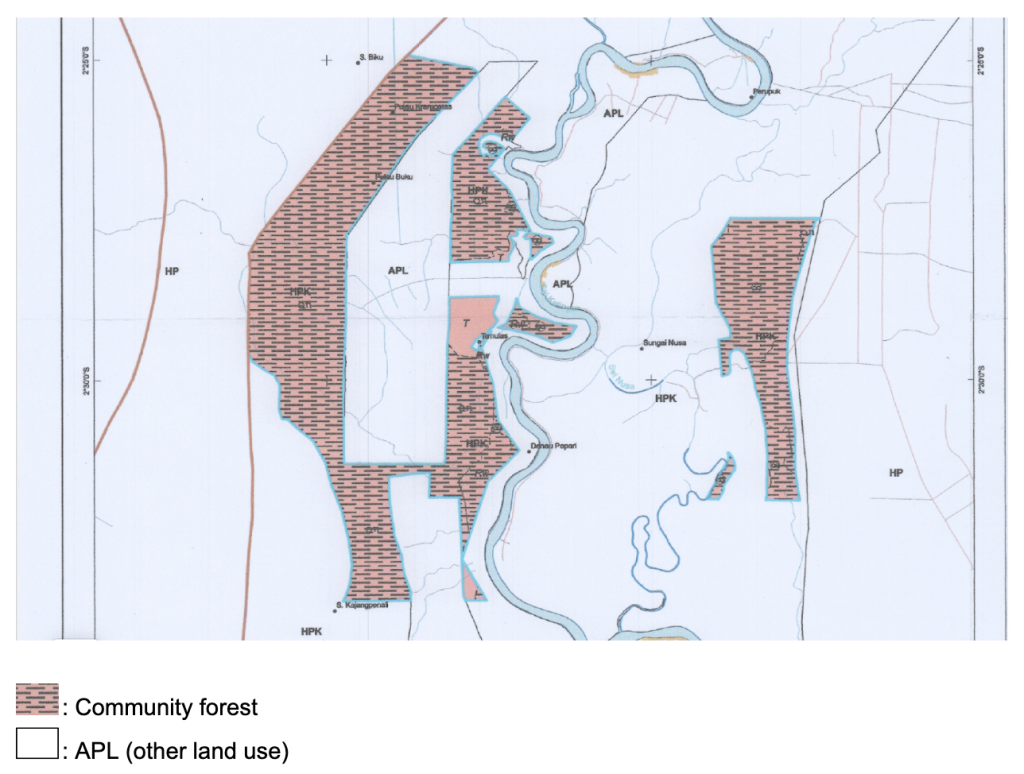
The people of Tampelas aspired to gain economic benefits from protecting the forest, and RMU recognized their dedication to this. This was one of the reasons Tampelas was chosen for this pilot project. Another factor was that Tampelas lies in the midpoint of villages on the Katingan River where snakehead fish are supplied, so the distance to transport the fish is not too far for any one village. Initially, Pak Sumber proposed to RMU to build ponds for a snakehead fish farm. After thorough participatory planning, the idea developed into this project, which integrates sustainable livelihoods, renewable energy, peatland restoration and disaster mitigation. Construction of the buildings were done by workers who were almost all from Tampelas, though training them took some time. Management of the albumin production and solar power plant would be handed over to the community as a village owned enterprise. Pak Sumber hopes that, with these livelihoods, there would be no reason for anyone in Tampelas to disturb the forest.
When the project is completed and fully operational, it will be a prime example of a village of the future. Tampelas will show the world that a remote village in Kalimantan that is prone to disaster can thrive on a restorative economy. -YTS
References:
- Himma Online (2022), accessed 3 January 2025, https://himmahonline.id/reportase/riwayat-masyarakat-tampelas-dahulu-pembalak-liar-kini-penjaga-hutan/