


Reached by kelotok from Kereng Bangkirai Pier, the Peat Swamp Forest Field Laboratory (LAHG), managed by CIMTROP-UPR, offers visitors the opportunity to learn about and experience the peatland ecosystem of Sebangau firsthand. With new facilities now being opened for visitors, an important question arises: how can surrounding communities be involved without compromising the area’s research and conservation?
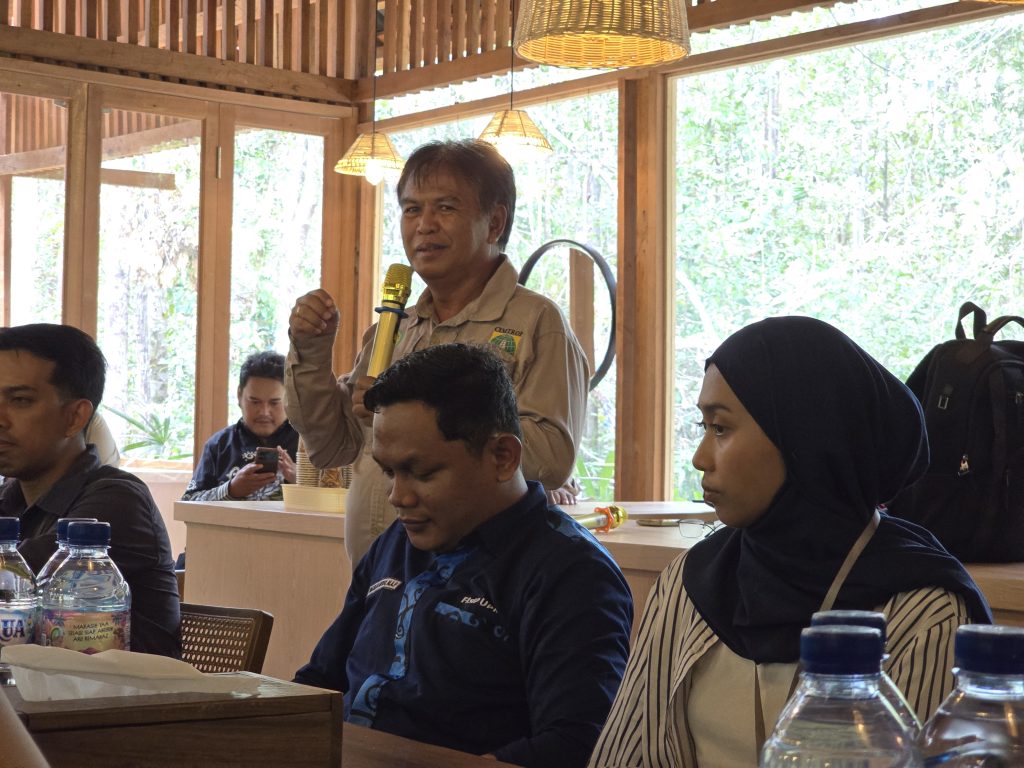
On Thursday, 11 June 2026, two YTS staff members attended a socialization event on new facilities for peatland conservation and ecotourism at LAHG. The activity was organized by the Centre for International Cooperation in Sustainable Management of Tropical Peatland (CIMTROP), University of Palangka Raya (UPR). Speakers at the event included Dr. Adi Jaya, Head of UPA PLG-CIMTROP, and peatland researcher Dr. Kitso Kusin. Representatives from the Palangka Raya Tourism Office, the head of Kereng Bangkirai urban village, local community members, UPR students, and NGOs were also present to discuss the use and management of the facilities.
Sebangau is an extensive peatland landscape, while LAHG is one of the research areas within it managed by CIMTROP-UPR. The area is used for research on peatlands, vegetation, and wildlife. New facilities at Camp LAHG allow visitors to learn about and directly observe the peatland ecosystem through designated trails. However, based on information shared during the socialization event, access to the conservation area still needs to be limited. Therefore, the socialization aimed to develop a common understanding of the limits on visitor access, applicable rules, and how surrounding communities can be involved without disrupting the research and conservation in the area.
A kelotok journey as an introduction to the peatland ecosystem
The experience began at Kereng Bangkirai Pier, where visitors boarded a kelotok, a motorized wooden boat commonly used for river transport in Kalimantan. Each kelotok carried up to five passengers, and the journey to the LAHG facilities took around ten minutes. Along the riverbanks, rasau (Pandanus helicopus) grew densely, while the river water appeared dark due to organic compounds released from partially decomposed vegetation in the peatland environment.
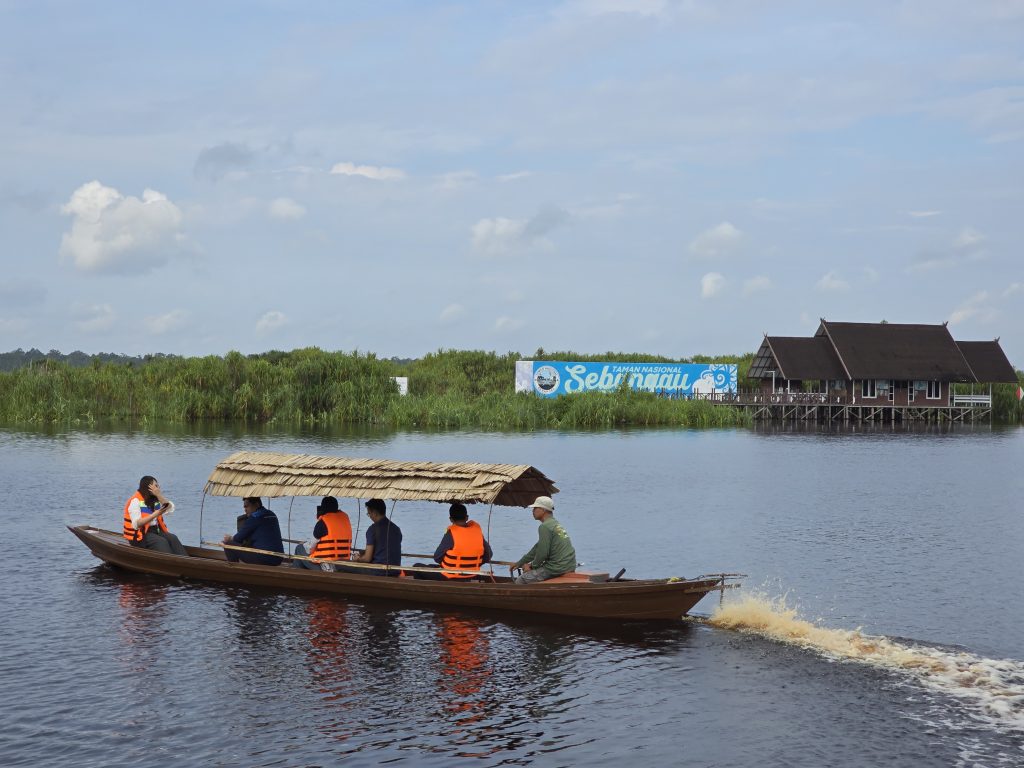
For visitors who are unfamiliar with peatlands, this short trip may raise many questions. Why is the river water so dark? What plants and wildlife live behind the vegetation visible from the kelotok? The dark colour of the water is a natural characteristic of peatland rivers, caused in part by tannins released from decomposing plant material that dissolve into the water. Explanations like these are important to help visitors understand that the river is not polluted, but rather a natural part of the peatland ecosystem.
This is where the role of the kelotok operator is important. At present, the kelotok primarily serves as a means of transportation to the LAHG Camp. However, according to Yonatan Ari Santoso of the Faculty of Social and Political Sciences at UPR, trained operators can also play an active role in introducing visitors to the river and the surrounding peatland ecosystem, including its local history and key information visitors should know before arriving at the main facility.
Kelotok operators are already familiar with the river routes, local vegetation, and locations where wildlife is occasionally spotted. Their knowledge can be further strengthened through training and educational materials developed by researchers from CIMTROP and UPR on peatland ecology, flora, and fauna. Equipped with this knowledge, operators can serve as guides from the moment visitors leave the jetty, making the kelotok journey the first stage of the learning experience about the peatland ecosystem.
The Swiftlet Monument and Heroes’ Gate mark the entrance to the peat swamp forest
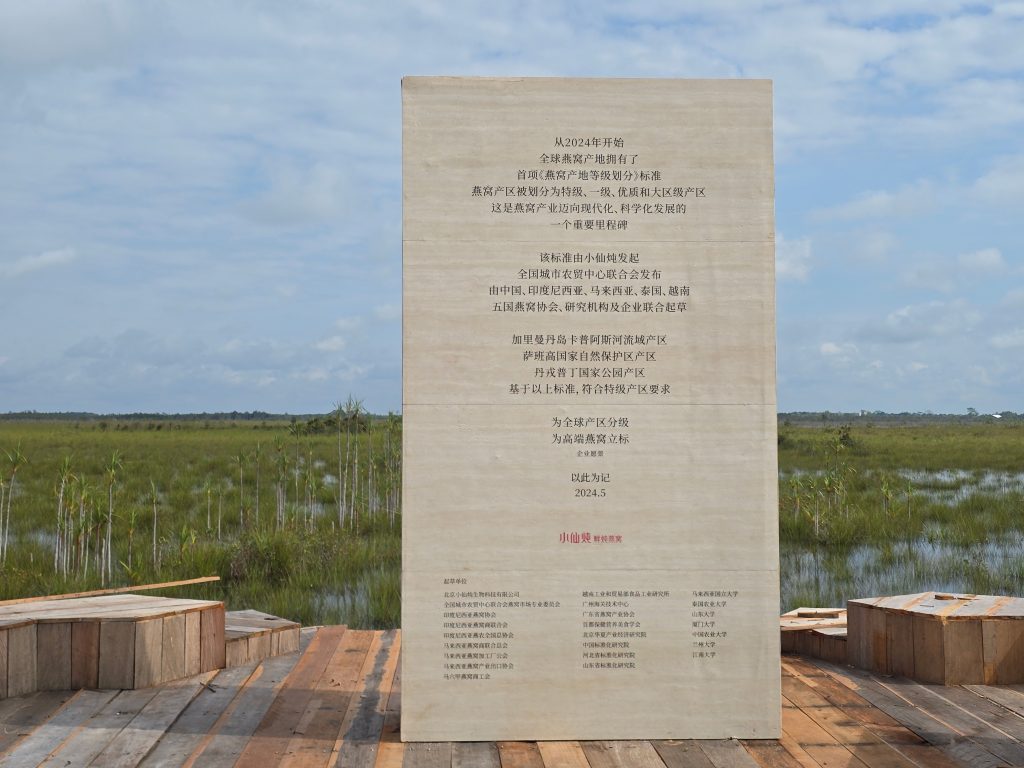
The kelotok then docks at a wooden platform built above the peat swamp. According to Dr. Adi Jaya, this area can also serve as a space for welcoming visitors, group photos, and small-scale cultural performances. On one side of the platform stands the Swiftlet Monument which symbolizes the support of Xiao Xian Dun, a Chinese food company that uses edible bird’s nest in its products. Through its corporate social responsibility (CSR) program, Xiao Xian Dun has supported the construction of several new facilities at the LAHG Camp. The inscription on the monument states that edible bird’s nests from Central Kalimantan, including the Sebangau region, are recognized for their high quality.
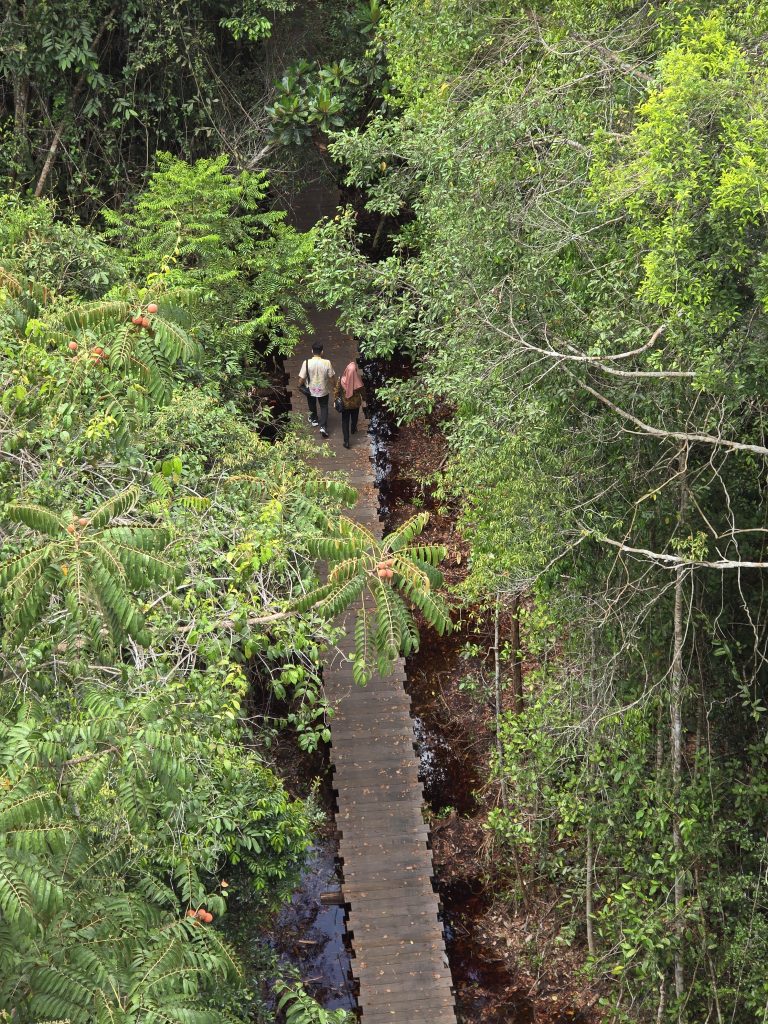
From the platform, visitors continue to the gallery via a 714-metre wooden boardwalk. The first section of the trail passes through an open peatland landscape, where dark pools of water, grasses, and low vegetation stretch along both sides. The boardwalk allows visitors to observe these features without stepping directly into the peat swamp. By keeping visitors on a designated path, it also reduces the risk of accidents while minimizing disturbance to the surrounding vegetation and nearby research sites.
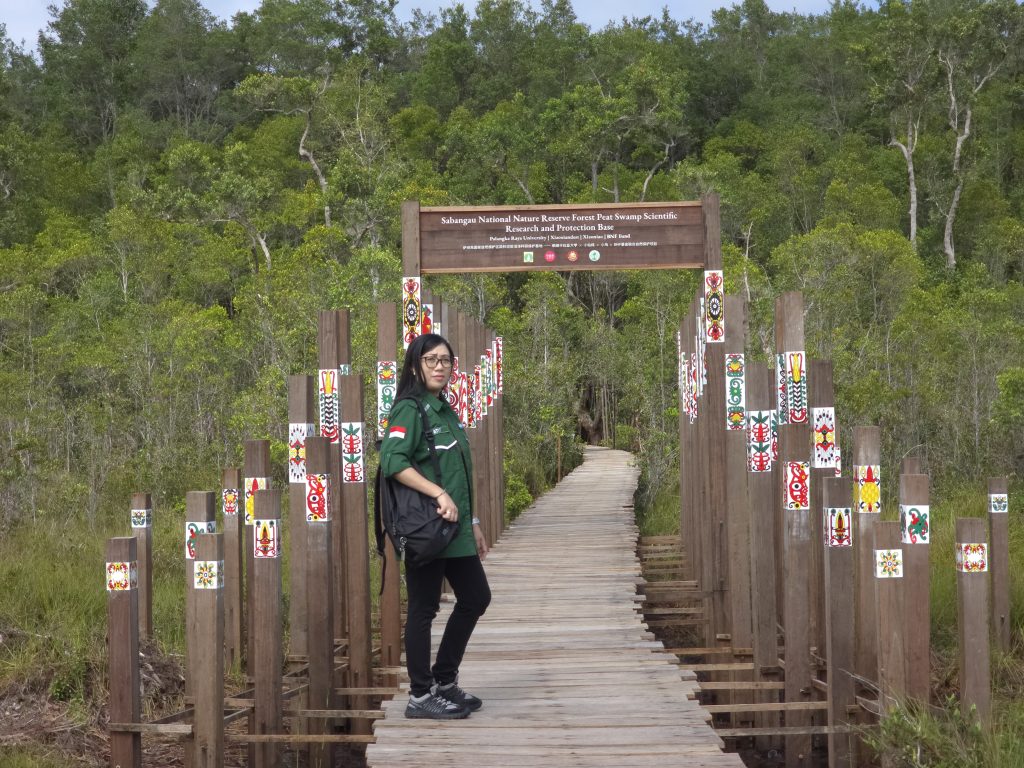
On the way to the gallery, visitors pass through the Heroes’ Gate, a wooden gateway decorated with Dayak motifs that marks the entrance to the forest. Dr. Adi Jaya explained that the name Heroes’ Gate carries a philosophical meaning centred on the courage to protect the area. In this context, being a “hero” means demonstrating a commitment to following the rules while visiting the LAHG Camp, such as not littering, maintaining a safe distance from wildlife, and refraining from disturbing vegetation or research sites. Guides are expected to explain both the philosophy behind Heroes’ Gate and the significance of the Dayak motifs that adorn it, helping visitors appreciate the cultural values embedded throughout the visitor trail.
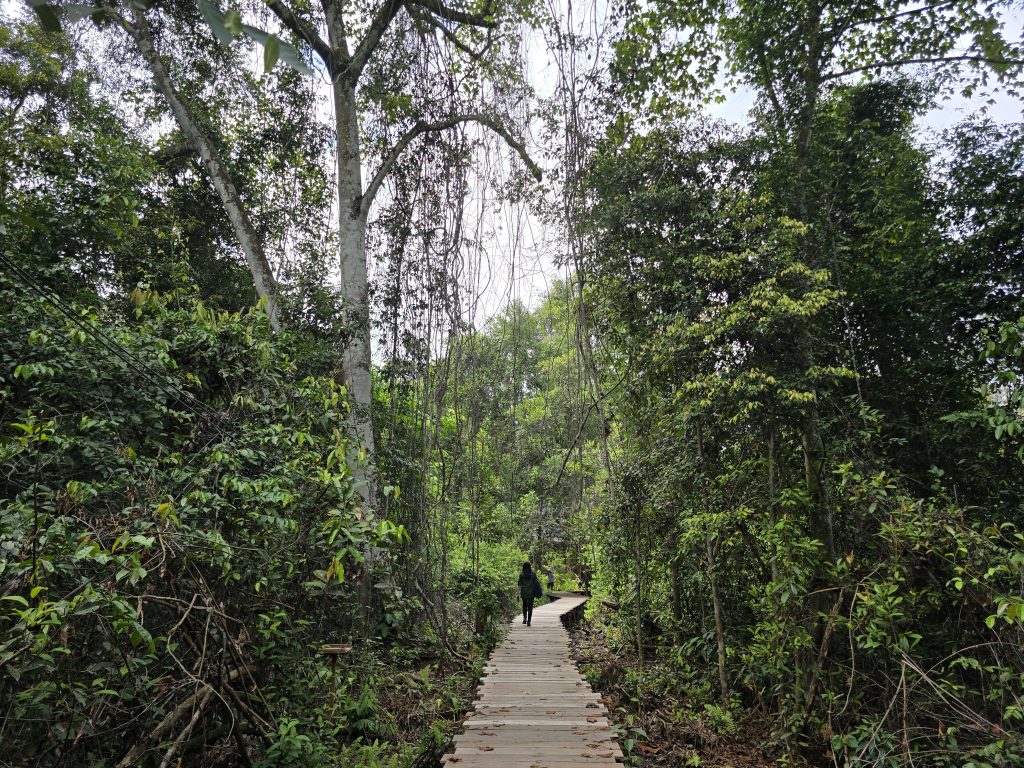
After passing through Heroes’ Gate, the boardwalk continues into a denser section of the peat swamp forest. Tall trees line both sides of the trail, and several have been fitted with identification labels to help visitors recognize different species. Following appropriate training, local guides are expected to build on the information provided on these labels by explaining the characteristics, ecological roles, and traditional uses of the trees. To do so effectively, guides will need training that equips them with accurate knowledge of peatland vegetation and ecology, as well as interpretation skills that enable them to communicate scientific information in a way that is both accurate and accessible to visitors.
Understanding peatland ecosystems at the LAHG gallery
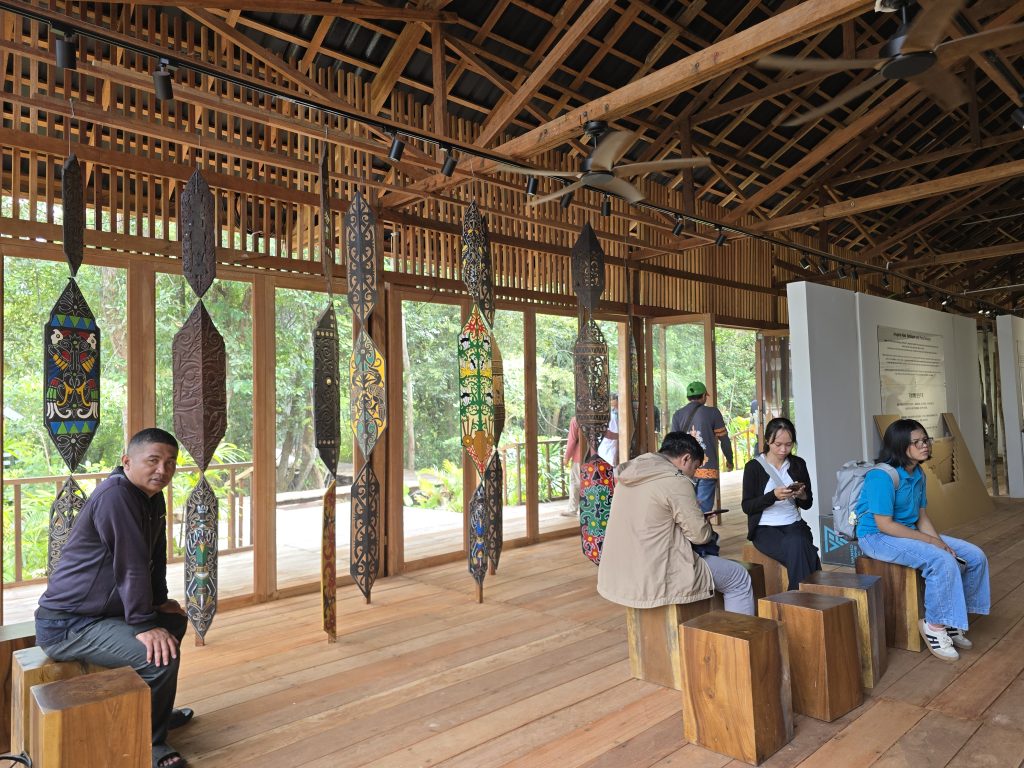
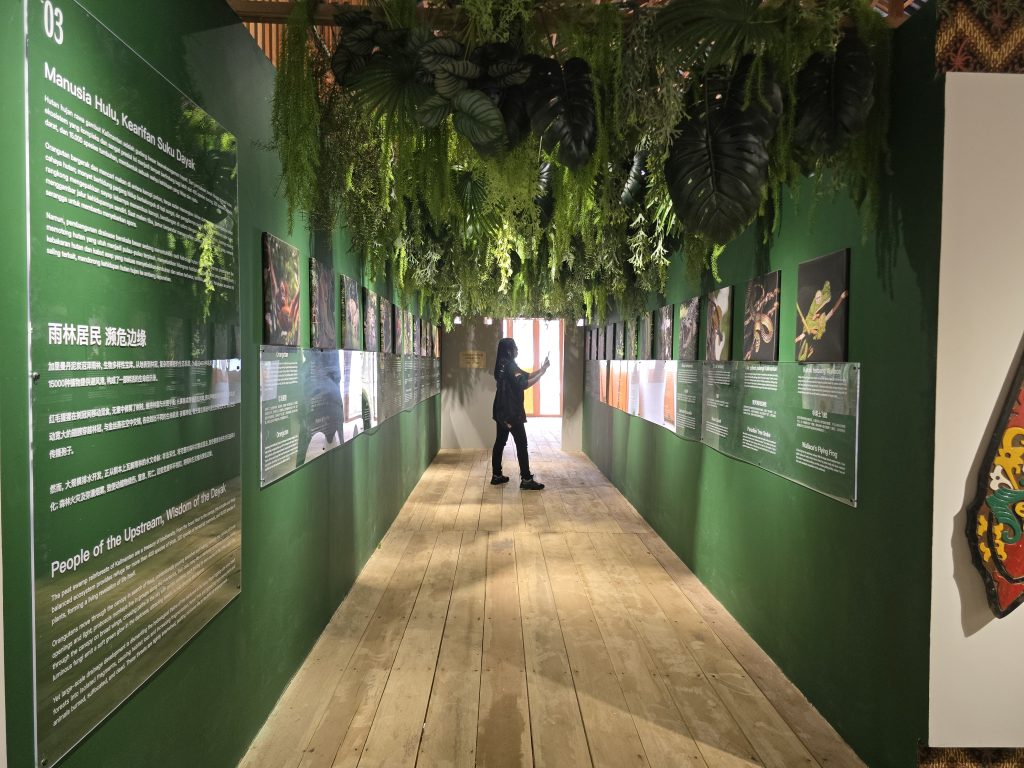
After walking along the boardwalk, visitors arrive at the LAHG Gallery, which also served as the meeting venue of the socialization session. The gallery features exhibits on tropical peatlands, its flora and fauna, communities living around the forest, Dayak culture, swiftlet farming, and the research conducted by CIMTROP-UPR and its partners. By the time they reach the gallery, visitors have already experienced the river, trees, and peat swamp vegetation along the trail. The exhibits help them connect these observations by explaining the relationships among water, peat, vegetation, wildlife, and the livelihoods of communities surrounding the Sebangau peatland.
“The primary purpose of this site is education”, Dr. Adi Jaya explained during the socialization session. The gallery supports this objective by helping visitors understand the many ecological processes within the peatland ecosystem that cannot be directly observed during a brief walk through the forest.
The gallery also introduces visitors to the rich diversity of flora and fauna found in the peat swamp forest. Orangutans are often the main attraction, but the area is also home to a wide range of other wildlife, including birds, reptiles, insects, gibbons, and many other species.
Trial visit to the LAHG Research Area
About 300 metres from the gallery is the research camp, where researchers conducting studies at LAHG are based. From the camp, they can access the various research sites to collect field data. Entry to the research camp and the observation tower for research purposes requires prior permission from CIMTROP.
Dr. Adi Jaya explained that CIMTROP is still refining its visitor management system for LAHG. Broadly, there are two categories of visits. General visitors can purchase an entrance ticket and follow a designated visitor route, with a daily capacity of approximately 50 visitors, a maximum group size of 15 people, and a visit duration of around two to three hours. Researchers, institutional guests, and groups visiting for educational or research purposes may submit a request directly to CIMTROP, allowing the itinerary and guide support to be tailored to the objectives of the visit and any ongoing research activities. Limiting the number of visitors and the size of each group helps prevent overcrowding in this environmentally sensitive area while ensuring that visitors can be effectively supervised.
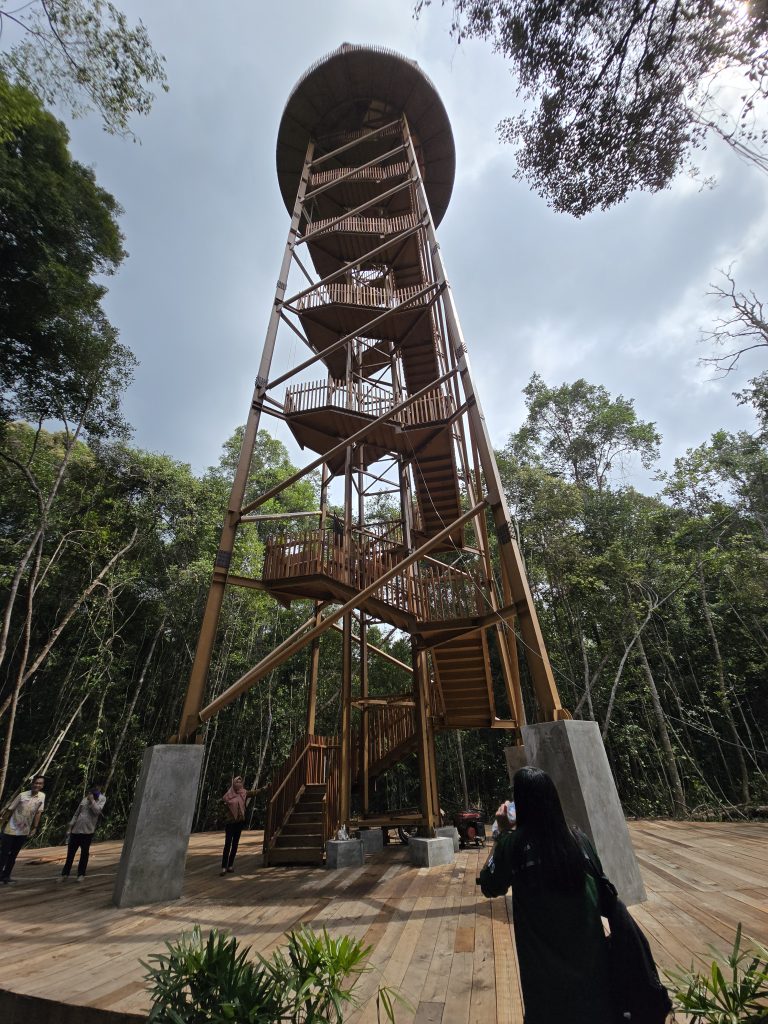
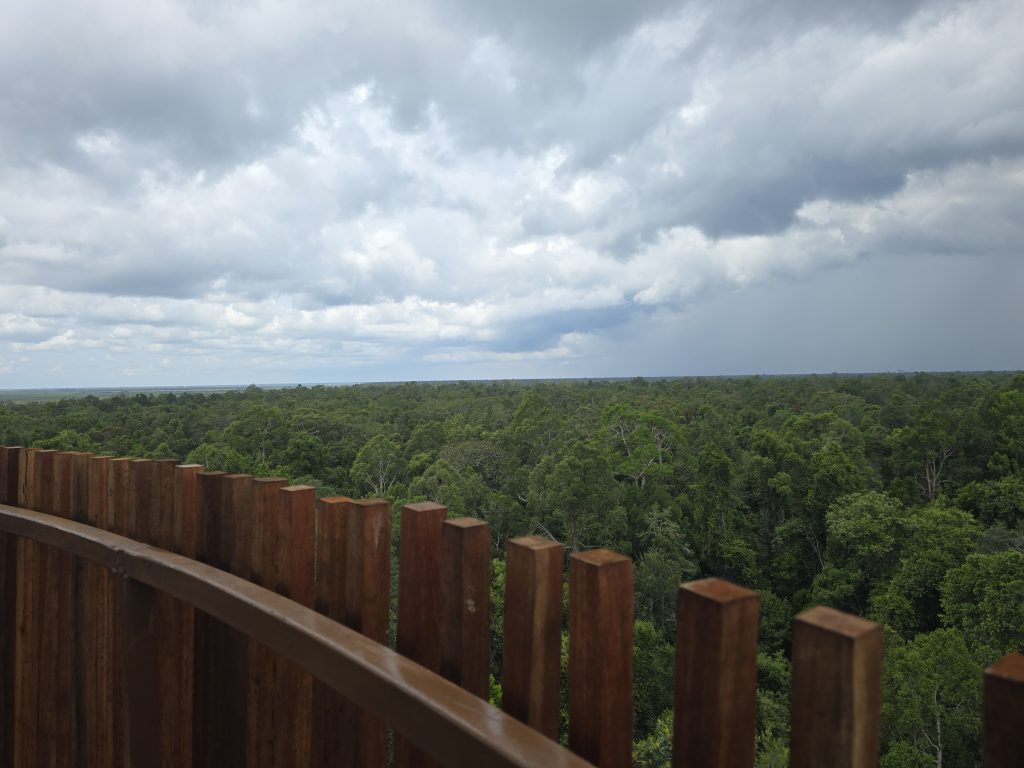
The 40-metre observation tower is one of the most prominent features at LAHG. It is used for environmental monitoring and scientific research. Rising above the forest canopy, the tower provides researchers with a vantage point to observe the structure of the peat swamp forest as well as the activities of birds, orangutans, red langurs (kelasi), and gibbons. On clear days, the view extends as far as the hills in Tangkiling and parts of the Palangka Raya landscape. According to Dr. Adi Jaya and Dr. Kitso Kusin, the best time for wildlife observation is between 2:00 p.m. and 4:00 p.m., when many species are most active. Access to the observation tower must take into account visitor numbers, the availability of guides, and weather conditions. Because the trail to the tower passes through wildlife habitat, all visits require prior approval from CIMTROP. This trial period allows CIMTROP to evaluate whether the proposed visitor management system can be implemented effectively without disrupting the surrounding environment or ongoing research activities. The findings from the trial will be used to revise future visitor regulations and operating procedures.
Waste management as part of conservation
As LAHG begins receiving visitors, waste management is one of the issues that needs to be addressed from the outset. Dr. Adi Jaya explained that CIMTROP encourages visitors to bring reusable water bottles to reduce the use of single-use plastic bottles. Visitors are also asked to place their waste in the collection sacks provided or take it home with them, ensuring that no litter is left along the visitor trail.
This policy is directly linked to LAHG’s role as both a wildlife habitat and a peatland ecosystem. Plastic waste left behind can be carried away, chewed, or ingested by wildlife. During the dry season, litter can also increase the risk of fire when the peat becomes highly flammable. For this reason, guidance on using reusable water bottles and managing waste should be provided before visitors board the kelotok, encouraging them to minimize single-use plastics and ensure that no waste is left behind in the LAHG area.
Community participation in ecotourism
In his presentation, Yonatan Ari Santoso emphasized the importance of community participation in educational tourism and conservation. Visitors are expected to leave with a better understanding of the peatland ecosystem and the lives of the communities surrounding Sebangau. Local residents can help enrich this learning experience by sharing their knowledge of the river, the forest, and the livelihoods that depend on both.
Community participation can begin as soon as visitors arrive at Kereng Bangkirai. Following appropriate training, kelotok operators are expected to take on an additional role as guides, introducing visitors to the river and the surrounding peatland ecosystem during the journey to the LAHG Camp. Trained local guides can also help interpret the area’s plant and animal life, local history, and Dayak cultural knowledge. Beyond providing kelotok transport and guiding services, local communities may also benefit from economic opportunities through the sale of food, handicrafts, and other locally made products.
Dr. Adi Jaya explained that CIMTROP plans to involve lecturers and researchers from UPR in developing educational materials on the flora and fauna of the Sebangau peatland ecosystem. This scientific knowledge can be complemented by local communities’ understanding of the area’s history, medicinal plants, traditional uses of the forest, and the environmental changes they have observed over time. Training will be essential to ensure that local guides are able to communicate this information accurately and effectively to visitors.
Opening LAHG to visitors while preserving its purpose
The new facilities at LAHG create opportunities for more people to experience the Sebangau peatland ecosystem firsthand. Visitors can observe the interconnectedness of the river, peat swamp, forest, and wildlife, while gaining a deeper understanding of why this landscape is important to protect and how it can be managed sustainably. The experience becomes even more meaningful when local communities play an active role in sharing their knowledge and, in turn, benefit from ecotourism activities.
The opening of LAHG to visitors must also remain aligned with its primary purpose as a site for research and conservation. For this reason, visitor numbers, designated routes, and permitted activities need to be carefully managed. With effective visitor management, tourism can help people learn about the peatland ecosystem while ensuring that ongoing research and the area’s wildlife are not disturbed.
A visit to LAHG creates the greatest value when visitors leave with a deeper understanding of the peatland ecosystem, while local communities benefit from their active involvement in ecotourism. Achieving this vision also requires the support of multiple stakeholders so that available resources, knowledge, and expertise can be brought together to develop educational ecotourism at LAHG while preserving its core functions as a research and conservation site.