



Tamanu (Calophyllum inophyllum), known locally as nyamplung, is a slow-growing tree that can be found in tropical, coastal areas throughout parts of Asia, Africa and the Pacific. Its thick foliage makes it a good windbreak and therefore is often planted on roadsides. Traditionally, it has many uses. Its wood is used in shipbuilding, usually for small boats and canoes. The oil from the nut, called tamanu oil, has long been used to treat various skin problems and nowadays it is used in skincare products. Its medicinal properties are impressive, with antibacterial, anti-inflammatory, anti-cancer, and anti-HIV potential.
In 2015, the Ministry of Energy and Mineral Resources initiated a program to develop crops for bioenergy, using degraded land in Central Kalimantan. This was triggered by Indonesia’s mandate to gradually incorporate more biodiesel in transport fuels. There is no shortage of degraded peatland in the province, but not much is known about what bioenergy crops can grow on them. To overcome this knowledge gap, researchers from Muhammadiyah University of Palangka Raya, together with CIFOR, tested the growth and performance of four plant species on degraded peatland1. The plants chosen were gamal (Gliricidia sepium), kaliandra (Calliandra calothyrsus), commonly used for biomass production; kemiri sunan (Reutealis trisperma) and nyamplung, whose seeds have high potential for biodiesel. These plants were also chosen for their tolerance to extreme soil conditions, as peat soil is known to be acidic and low in nutrients compared to other types of soil.
The trial was carried out from March 2016 to February 2017 in the village of Buntoi, Pulang Pisau on two separate one-hectare plots of shallow peat (50-100 cm depth), with monoculture and agroforestry conditions. Out of the four species, nyamplung performed the best, with a survival rate of 88% and had better growth in agroforestry conditions. We spoke with Dr. Siti Maimunah, who took the lead in this experiment, and she believes that nyamplung is the most suitable biofuel plant that we know of to grow on degraded peatland. Its adaptability to waterlogged conditions makes it perfect for peatland, which needs to remain wet to be healthy. Its ecological benefits extend further: nyamplung flowers feed bees, and its fruit supports birds and small mammals.
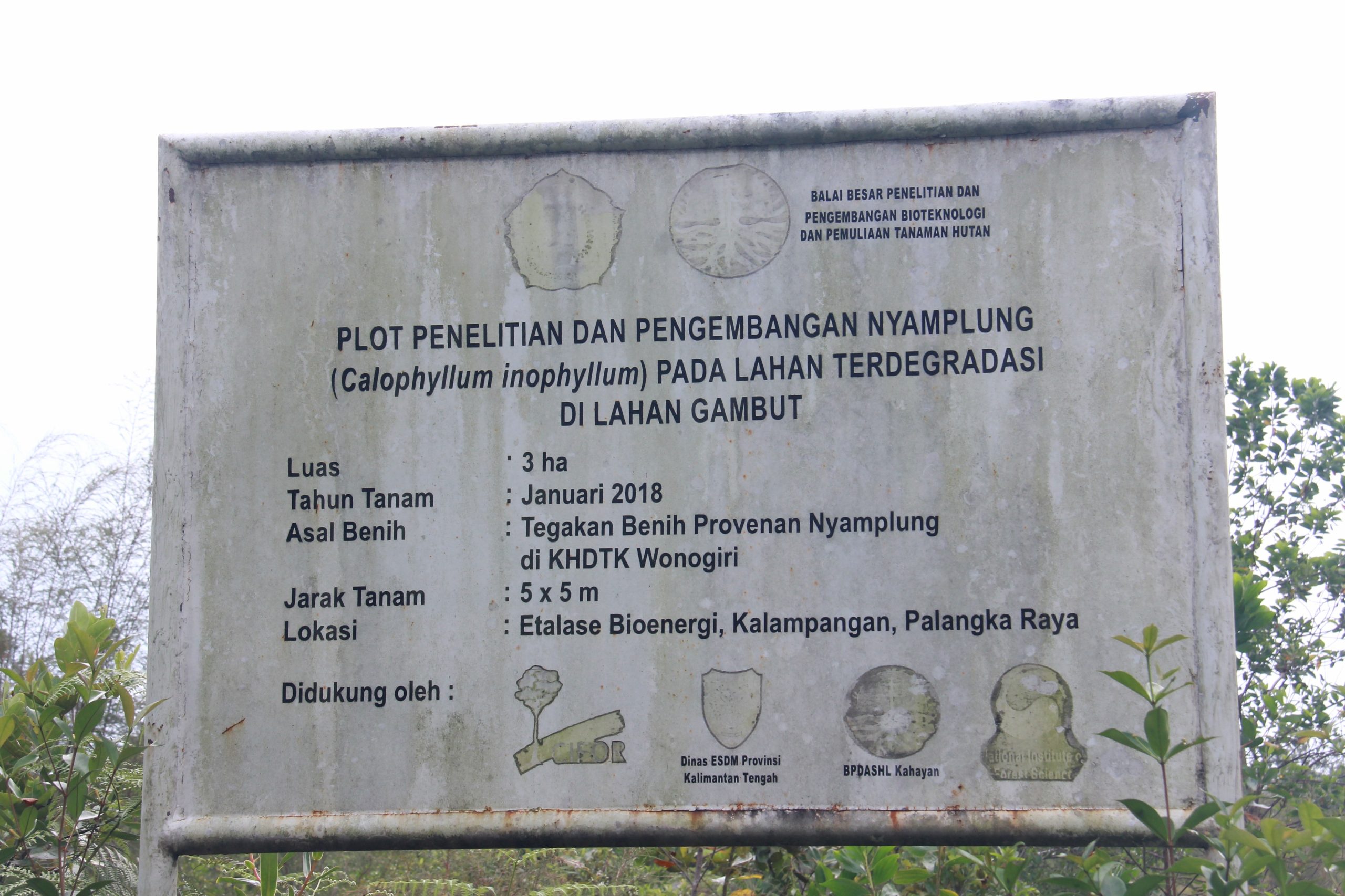
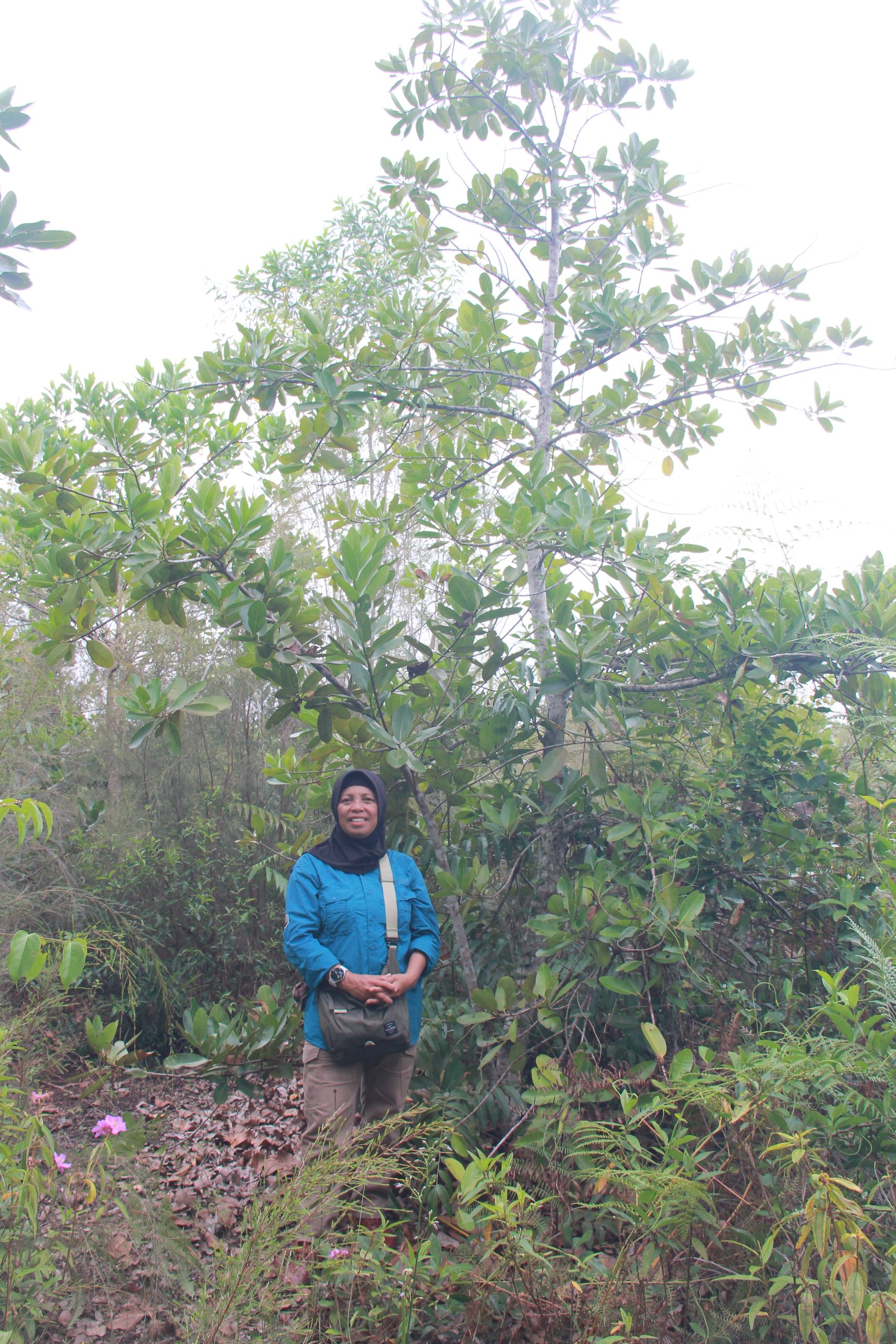
On July 23rd, we went with Dr. Siti to Kalampangan, at the outskirts of Palangka Raya, to visit another nyamplung demonstration plot. It was a three hectare plot on land owned by Central Kalimantan’s Department of Energy and Mineral Resources. In 2018, she planted nyamplung seedlings from the Special Purpose Forest Area (KHDTK) in Wonogiri, with 5 x 5 m spacing. Seven years later, 50% of the trees survived, growing to around five meters, but only a few of them bore fruit. The plot was monitored only annually and left untreated, offering a glimpse into nyamplung’s resilience. There were several acacia trees that grew voluntarily on the plot. However, voluntary growth of allelopathic acacia trees inhibited nyamplung’s development. This highlights the importance of site selection and species compatibility in restoration planning.
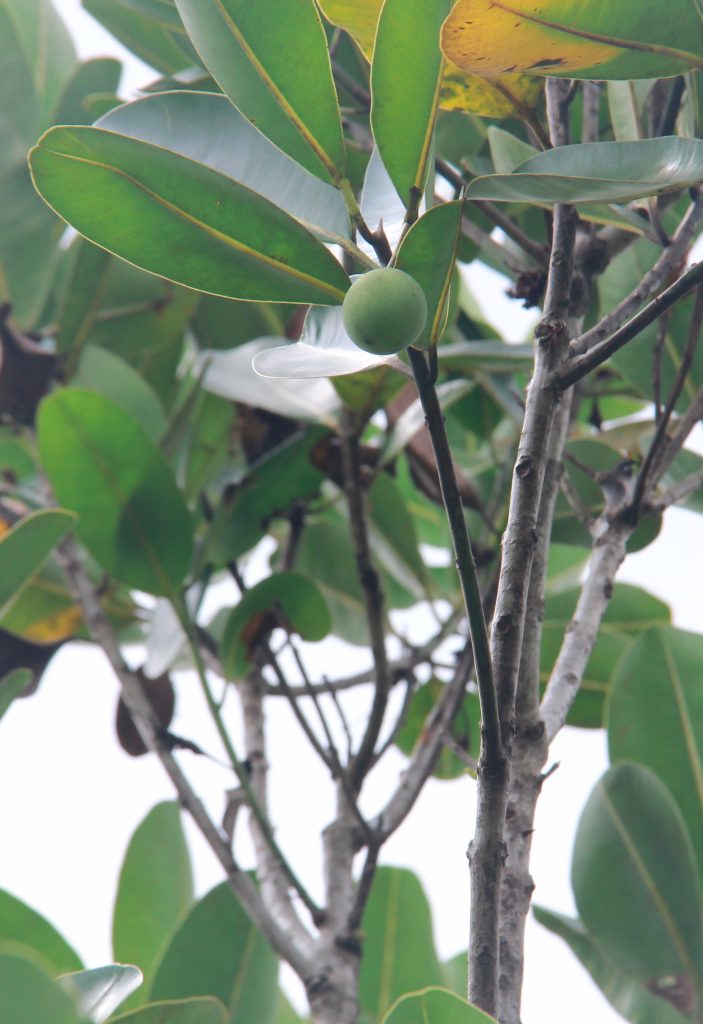
All the evidence of the benefits of nyamplung for peatland restoration and its uses raises the question of why virtually no one in Kalimantan is using it in restoration-livelihood programs. It can grow on peatland and has several uses. According to Dr. Siti, nyamplung as a source of biofuel has heavy competition with the palm oil industry, which already has a well-established market and supply chain. Currently, there is an increasing global demand for its oil for skincare products and pharmaceuticals, especially in Japan and South Korea. Dr. Siti says that for farmers in Kalimantan, nyamplung could be a viable secondary crop in agroforestry systems. Since it takes four years to fruit, pairing it with short-term commodities ensures economic feasibility. Nyamplung is more than a biofuel source—it’s a symbol of ecological resilience and economic opportunity. Its ability to thrive on degraded peatland, support biodiversity, and generate income makes it a strategic asset for sustainable development. The question now is not whether nyamplung can deliver—but whether we’re ready to invest in its promise.
References:
- Maimunah, S., Rahman, S. A., Samsudin, Y. B., Artati, Y., Simamora, T. I., Andini, S., Lee, S. M., & Baral, H. (2018). Assessment of suitability of tree species for bioenergy production on burned and degraded peatlands in Central Kalimantan, Indonesia. Land, 7(4), 115. https://doi.org/10.3390/land7040115
- Johanssen , M. (n.d.). Traditional Tamanu: Healing land and body. Forests News. May 15, 2025, https://forestsnews.cifor.org/68011/traditional-tamanu-healing-land-and-body?fnl=en
- Ipb.ac.id. (2023, October 16). Tim PKM IPB University Ungkap Mangkraknya pabrik program Desa Mandiri energi Nyamplung Patutrejo. IPB University. https://www.ipb.ac.id/news/index/2023/10/tim-pkm-ipb-university-ungkap-mangkraknya-pabrik-program-desa-mandiri-energi-nyamplung-patutrejo/
- Fajar, J. (2021, December 29). Kisah para Pejuang BBN Nyamplung. Mongabay.co.id. https://mongabay.co.id/2021/12/29/kisah-para-pejuang-bbn-nyamplung/