



The Center of Peatland Science, Technology and Innovation (PPIIG) is a seven-floor building located at the edge of the campus grounds of the University of Palangka Raya. Built in 2020, it is a center of excellence, dedicated to research and development of peatlands in the natural, social and engineering sciences. On its 4th floor, there is an information center on all things related to peatlands. I was at the right place and at the right time to get a personal tour of the mini-museum from the director of PPIIG himself, Associate Professor Hendrik Segah. The most interesting display for me was a miniature model of the several types of canal blocks, because, until then, I only knew of one type of canal block. Dr. Hendrik Segah was showing around visitors who were there for the workshop “Launching a Roadmap for Peatland Restoration” which was held in the spacious ballroom on the top floor. It was the perfect venue for a three-day workshop on May 21-23 about peatland restoration.
An eight-year research project
The event marked the end of the Gambut Kita project, which had the objective to improve community fire management and peatland restoration in Indonesia. Over the course of eight years, the team of researchers in Gambut Kita have published 30 scientific papers about peatlands in international journals. The findings from that research were consolidated into a roadmap. Work on the roadmap, which is Core Project 4 (CP4) of the Gambut Kita project, started in 2021. The team consists of researchers from Badan Riset dan Inovasi Nasional (BRIN), Commonwealth Scientific and Industrial Research Organization (CSIRO) and Australian National University (ANU), as well as experts from YTS and Borneo Orangutan Survival Foundation (BOSF). For two days before the launch, they drafted a policy brief on three aspects of peatland restoration: knowledge, values and institutional support. The policy brief draws from their main findings, which are as follows: research on tropical peatlands in Indonesia is lacking and fragmented, there are flaws in the regulatory framework for peatland restoration and the government agencies are not able to work together effectively to restore peatlands. The document outlines what systemic changes are needed to create the conditions that make restored peatlands a foreseeable future.
Multi-stakeholder workshop advances peatland restoration roadmap
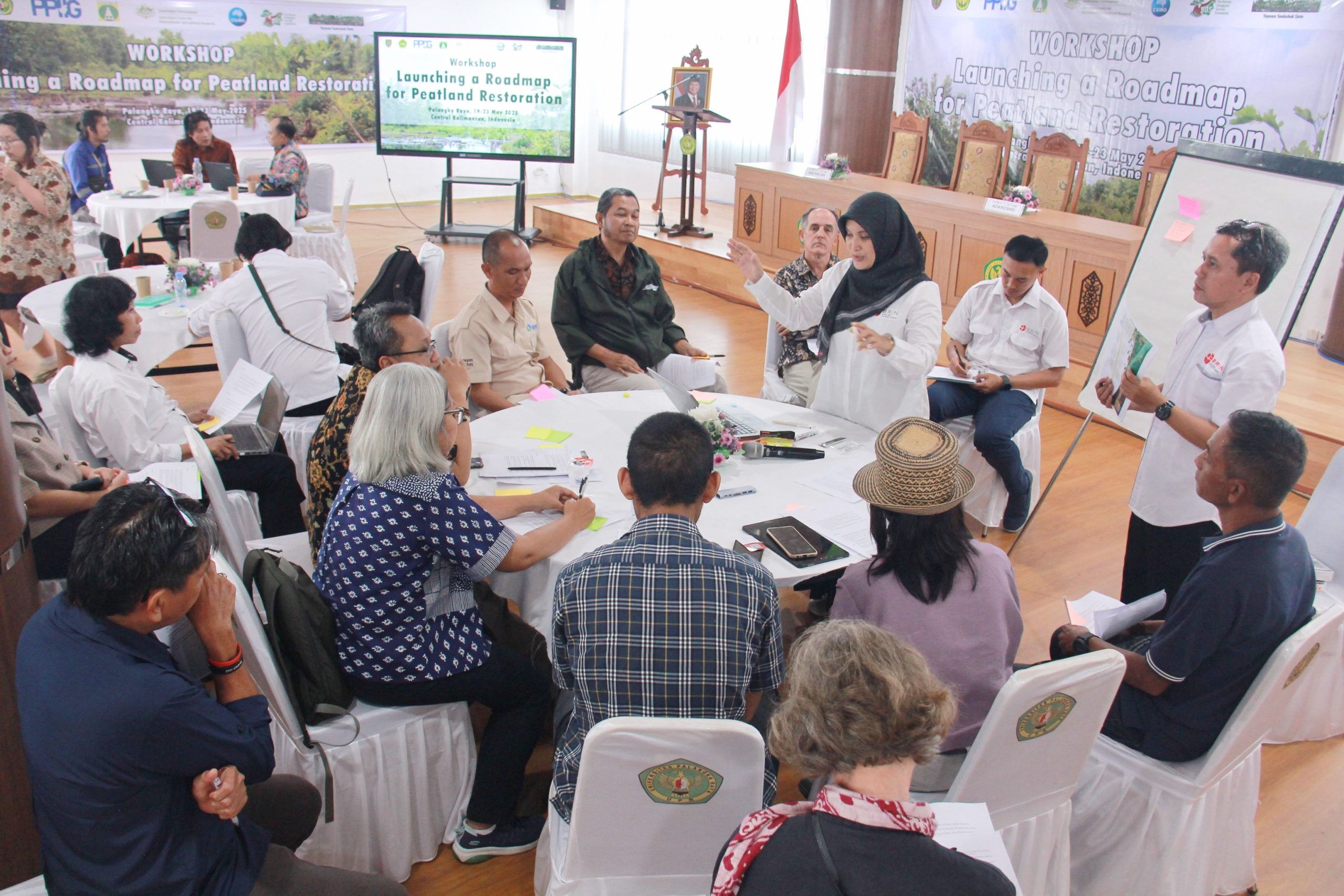
Organized by Yayasan Tambuhak Sinta (YTS), the event brought together stakeholders, totalling 81 people, from the government, the community, the media, academia and NGOs. The diversity of the attendees is the result of the network and relationships that YTS has built over the years in community and stakeholder engagement as part of the Gambut Kita project. This inclusivity is much needed in order to find holistic solutions for peatland restoration, which touches on all aspects of the society. On the first day, the workshop started with Dr. James Langston and Tri Wira Yuwati, members of the CP4 team, presenting their main findings of the roadmap. Afterwards, Wandy Tuturoong, executive director of YTS, facilitated an open forum where the participants shared their perspectives on peatland restoration. Some key speakers of the forum were Jany Tri Raharjo, BRGM’s head of the working group for peatland restoration in Kalimantan and Papua, Herbert Marpaung from the Presidential Staff Office and Dr. Jatna Supriatna, renowned zoologist and head of the Research Center for Climate Change at the University of Indonesia. The facilitator made sure that key representatives of the different stakeholder categories had a chance to speak, so we would have a clearer and bigger picture of why past efforts at peatland restoration were not successful. After the lunch break, everyone was divided into three groups that were invited to give their inputs and suggestions on each of the three areas of the policy brief: knowledge, values and institutional support, facilitated by the researchers from BRIN. The groups rotated until they covered all the areas.
Field trip
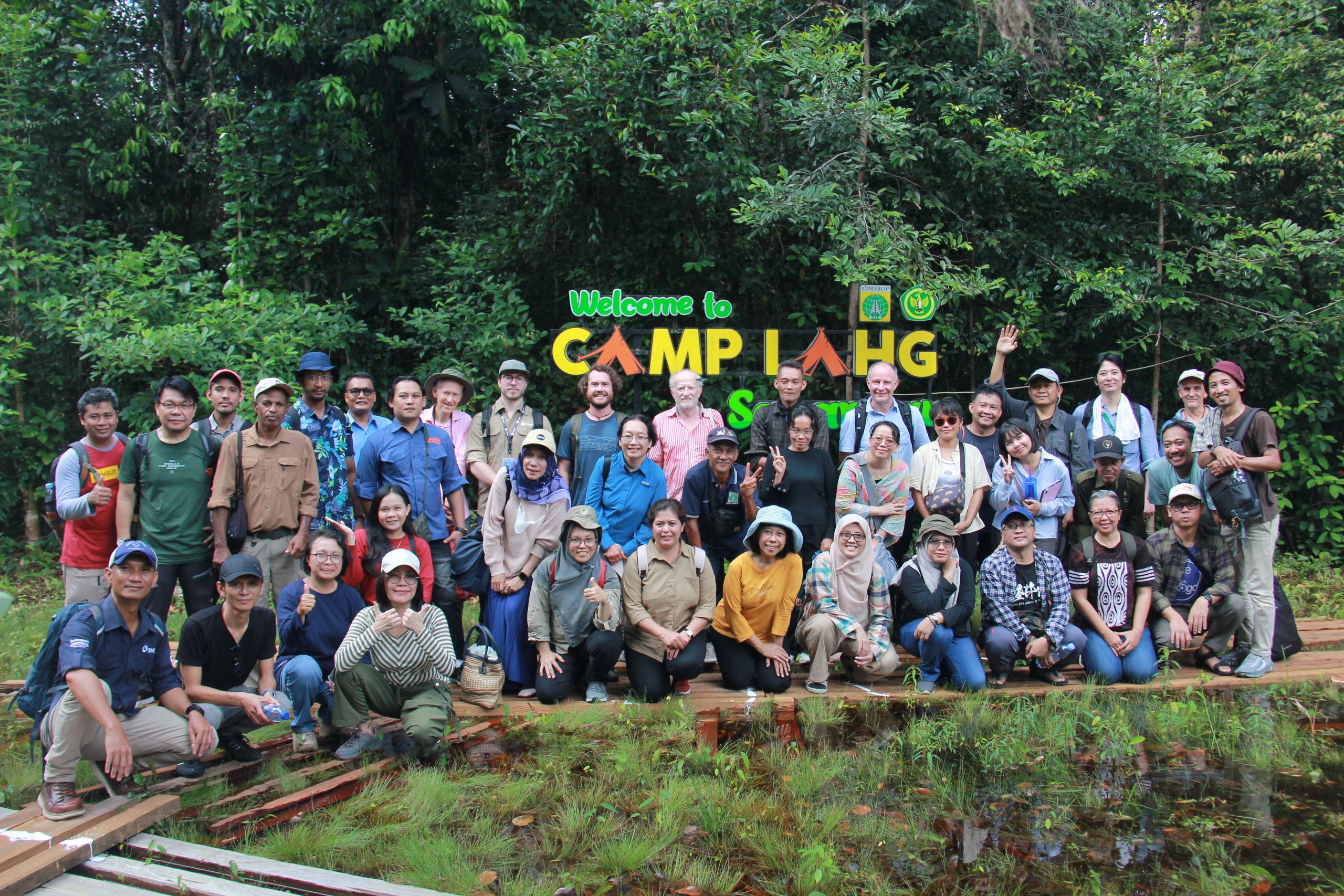
The second day was spent at two important sites for peatlands restoration: the Center for International Cooperation in Sustainable Management of Tropical Peatland (CIMTROP) in Sebangau National Park and the Peat Information Center in Tumbang Nusa (PISIG: Camp Peat KHDTK). It was a chance for the participants to feel and see the peat directly so that they have a better understanding of what they are talking about. From Bahalap Hotel, the group went by bus, then boat to reach the CIMTROP camp across the river. Kitso Kusin, the head of the research camp, welcomed the group and gave a presentation about the history and function of the camp. Some people explored the peat swamp forest by a transect where they discovered a recently used orangutan nest, quite close to the camp. Next stop was Camp Peat KHDTK in Tumbang Nusa. They were given a tour of the information center and learned about the efforts to reforest the peatland in Tumbang Nusa where fires have occurred repeatedly since 1995, including the big fire in 2015.
Action plan
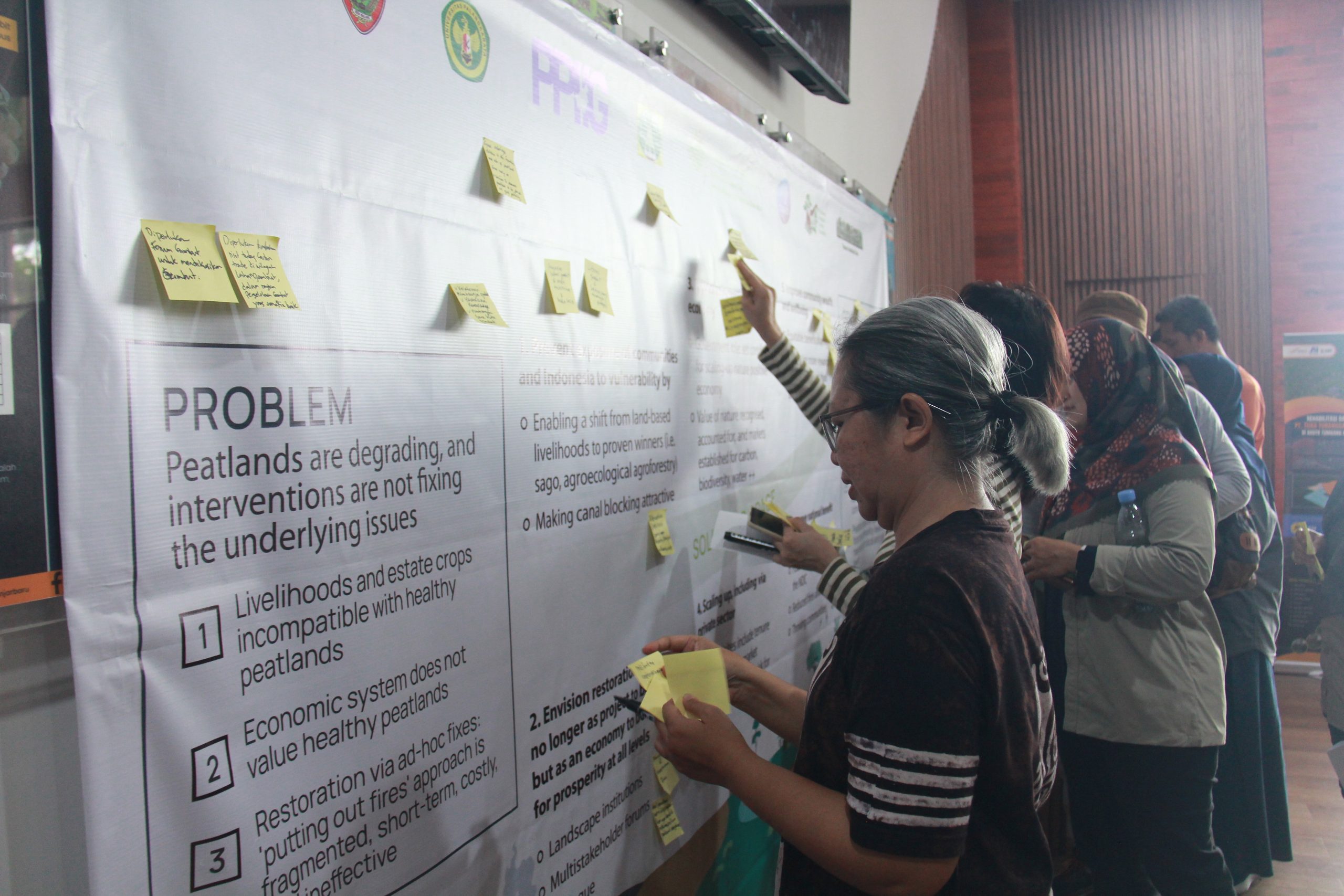
On the last day of the workshop, the participants gathered again at the PPIIG building. Dr. James Langston reiterated the main takeaways from the roadmap and what systemic changes are needed to restore peatlands. He also thanked the team of researchers in Gambut Kita, who have worked together for eight years. As the last activity, everyone broke into three groups for a brainstorm session to each come up with five key persons whom to show the policy brief and roadmap to. The workshop ended with closing remarks from Dr. Hendrik Segah and Wandy Tuturoong. As a follow up, the Gambut Kita team met with Edy Priyono, Deputy II of the Executive Office of the President (KSP), to give him the main points of the roadmap. The meeting would not have been possible without YTS’s strategic connection with KSP. The plan is to form a panel between BRIN, KSP, the Minister of Forestry and the Minister of Environment to initiate dialogue on peatlands. Restoring peatlands in Indonesia is a mammoth effort that cannot rely only on the national budget to pay its costs. As mentioned in the policy brief, attractive financing schemes should be developed that promote green investments such as nature based solutions, green bonds, blended finance and other financial instruments.