


The Potential of Sorghum as a Cereal Crop on Peatlands

A farmer group called ‘Alam Tani’ in the town of Dumai in Riau Province were able to grow sorghum on peatland1. They were approached by PT Kilang Pertamina Indonesia (PT KPI) Dumai Unit for their Corporate Social Responsibility (CSR) program, with the aim to develop and empower the community through the farmer group by introducing sorghum as a possible livelihood on peatland. This initiative is in support of the government’s program to strengthen the country’s food security by diversifying and developing alternative cereal crops like sorghum. They have been promoting sorghum since 2022 and have a target to plant 150,000 ha in Indonesia this year2.
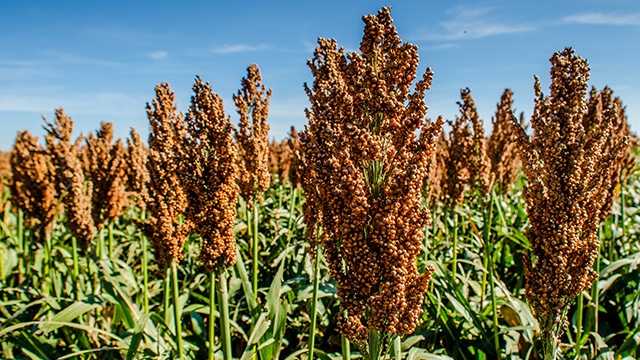
A field of sorghum ripe for harvest. Photo taken from Ministry of Agriculture website.

Sorghum's versatility

The genus Sorghum is part of the grass family and it has numerous species spread over Africa and Asia, but the one that is produced commercially is Sorghum bicolor. It is the fifth most important cereal crop grown in the world. It grows up to 1 – 3 meters and produces seeds at the top of the plant. There are several reasons for its appeal as a substitute staple crop and one of them is the range of environments that it can live in. They can grow within altitudes of 2500 m; tolerant to acidic soil, drought and saline conditions3. Compared to other cereal crops, like maize, sorghum has a lower production cost and higher water efficiency. Their ability to thrive in arid marginal land make them a popular food in India, China, Mexico and several African countries. Its nutritional content is higher compared to other carbohydrate-rich grains, containing high amounts of essential minerals like phosphorus, magnesium, iron and copper and trace amounts of zinc, calcium and potassium. Sorghum contains high protein and fiber content, concentrations of bio-active compounds, and phytochemicals that have anti-oxidant and anti-inflammatory properties4. However those phytochemicals, which include phenolic acid and tannins, give it a bitter taste. The fact that it is gluten-free limits its use in the food industry. For these reasons, it is not commonly consumed by people in developed countries like the US and Australia, where they produce sorghum for animal feed and bioethanol. In addition, sorghum stalks, with their long fibers, are used for building materials.

The Limitations of Peatland for Agriculture
Only certain kinds of peat can be used for agriculture. Shallow peat, with a depth of 1.4 – 2 m, is considered more fertile and is suitable for various food crops5 . A study was done by Andriani et al (2024) on the performance of sorghum on peatlands with various fertilizers in West Aceh6 . The soil had a pH of 4.67, very acid. They tested different doses of fertilizers with varieties of sorghum. It was found that the amount of NPK (nitrogen, phosphorus and potassium) fertilizers had no significant effect on its growth, except the number of leaves. The low pH of the soil limits how much of the nutrients that the plants can take up. The control samples, with no fertilizer application, grew to a height of 174 cm with a stem diameter of 15 mm. There is no information on the use of fertilizers in the sorghum program in Dumai, but it is possible to grow sorghum without fertilizers, as was observed in this study.
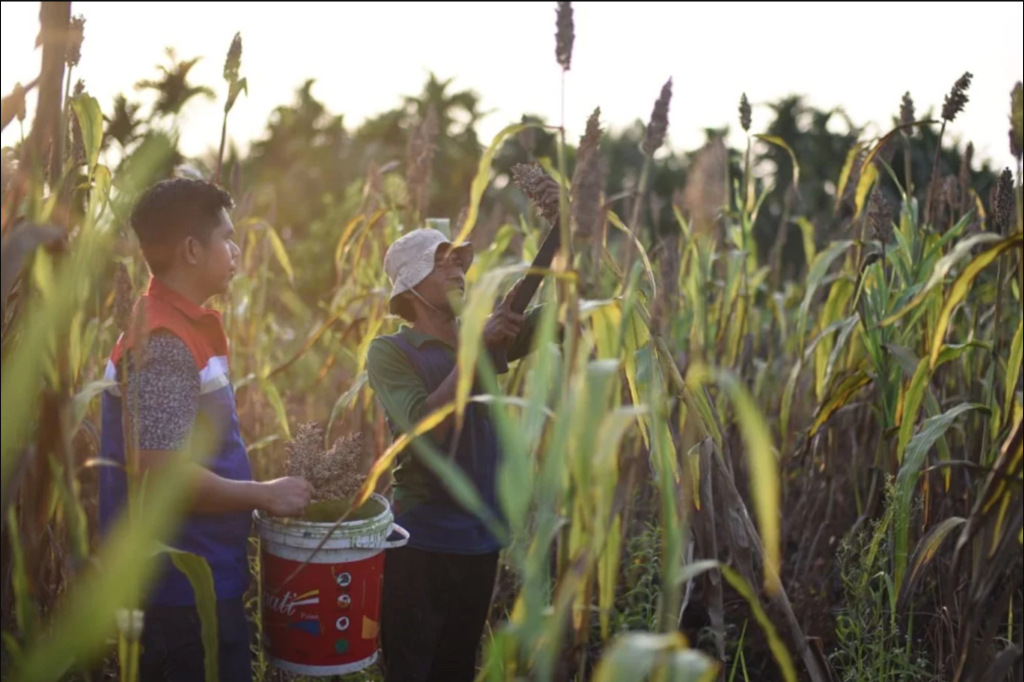
A farmer in Dumai harvests sorghum manually. Photo taken from sumatra.bisnis.com.

The area in the town of Dumai consists of 80% peatland7 and it has been affected by peat fires and haze. The development of PT KPI’s sorghum program began as a response to the fires. They are committed to support activities that mitigate the fires as well as helping to develop communities that live on peatland. In the program, they collaborated with the Agricultural Technology Assessment Center (BPTP) of Riau to introduce sorghum to the ‘Alam Tani’ farmer group as a possible livelihood. They first tried planting sorghum on one hectare in December 2022 and six months later had their first harvest, of which 20 kg was sold. The rest they used to develop sorghum food products and for animal feed trials. In the second planting, their harvest had reached two tons. One of their customers, who is diabetic, regularly buys their sorghum. It is suitable for people with diabetes, since it has a low glycemic index. On peatland, the farmer group were able to grow other crops such as spinach, water spinach and okra and have successfully grown liberica coffee from Africa. “We believe we can develop its potential even greater. Sorghum can substitute rice for daily consumption and its waste can be used as animal feed, increasing added value for farmers or breeders”, said Rudi, one of the members of ‘Alam Tani’. The general manager of PT KPI Dumai Unit, Didik Subagyo, shares their sentiment and plans to build strategies for its marketing and processing to expand it, starting with the town of Dumai.
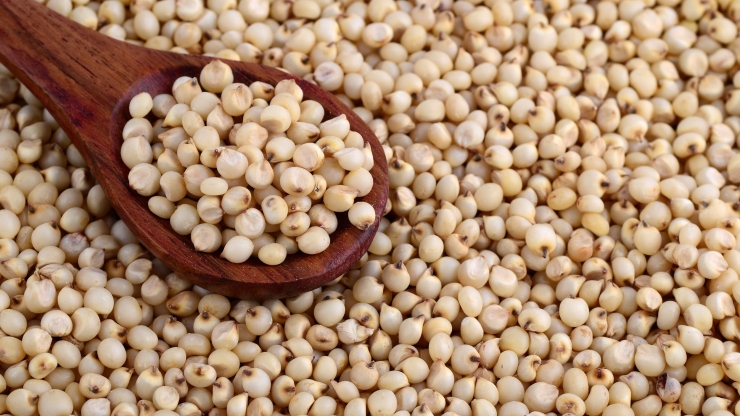
Sorghum grains that have been processed. Photo taken from kompasiana.com.
References:
  1. Bisnis.com (2023), Petani Dumai Kembangkan Sorgum di Lahan Gambut sebagai Alternatif Pangan, accessed 17 September 2024. https://sumatra.bisnis.com/read/20230504/534/1652725/petani-dumai-kembangkan-sorgum-di-lahan-gambut-sebagai-alternatif-pangan
  2. Direktorat Jenderal Tanaman Pangan (2022), Dukung Pengembangan Sorgum, Kementan Siapkan Produksi Benih Sumber Sorgum, accessed 18 September 2024, https://tanamanpangan.pertanian.go.id/detil-konten/berita/401
  3. Hossain, S., Islam, N., Rahman, M., Mostofa, M. G., Khan, A.R. (2022). Sorghum: A prospective crop for climatic vulnerability, food and nutritional security. Journal of Agriculture and Food Research.
  4. Tanwar, R., Panghal, A., Chaudhary, G., Kumari, A., Chhikara, N., (2023). Nutritional, phytochemical and functional potential of sorghum: A review. Food Chemistry Advances. 
  5. Hadianto, W., Jalil, M., Sarwanidas, T., & Zulkifli. (2018). The response of some varieties towards growth and crop production of peanut (Arachis hypogeae L.) on peatlands. (In Indonesian.). Jurnal Agrotek Lestari, 1(1), 73-80. 
  6. Andriani, D., Irawan, J., Syahputra, I., Siregar, M. P. A., & Sari, P. M. (2024). Performance of sorghum varieties with various fertilizer doses in peatlands of West Aceh Regency. Jurnal Agronomi Indonesia (Indonesian Journal of Agronomy), 52(1), 92-100
  7. Media Center Kota Dumai (2022), Wamen LHK Tinjau Restorasi Gambut, Wali Kota Bersyukur Revegetasi Sungai Dumai Segera Dikerjakan, Accesed 23 September 2024, https://mediacenter.dumaikota.go.id/berita/baca/279/wamen-lhk-tinjau-lokasi-restorasi-gambut-wali-kota-bersyukur-revegetasi-sungai-dumai-segera-dikerjakan