



It is evident that the protection and restoration of peatlands in Indonesia cannot be done without the local community. It is unrealistic to completely close off peatland areas to human activities for two reasons: people already live there and a majority of peatland is already altered by drainage canals that stretch for thousands of kilometers, especially in Central Kalimantan. Those canals need human intervention to block and maintain, so that the hydrological function of the peat can be restored.
For many communities living on peatlands, the landscape is not only an ecosystem but also a source of daily survival. Farming, fishing, harvesting forest products, and managing small-scale plantations are deeply tied to household incomes and local food systems. In many peatland regions, limited infrastructure, market access, and employment opportunities leave communities with few alternatives outside the land around them. As a result, peatland conservation efforts cannot succeed by separating people from the landscape, but by supporting ways of using peatlands that sustain both livelihoods and ecological functions.

Peat-friendly livelihoods are not only about finding alternative sources of income. They are about reshaping how communities use peat landscapes in ways that reduce degradation, prevent fire risks, and maintain the ecological functions of peatlands. Across the articles published on Gambut Kita, several livelihood practices show that economic needs and peatland protection do not have to be treated as separate agendas. This article consolidates those stories to highlight practical examples, lessons learned, and remaining challenges in developing livelihoods that are productive, locally relevant, and compatible with peatland conservation.
But first, we need to clarify what “peat-friendly” actually means in this context. A common misconception is that peat-friendly simply means environmentally friendly. In reality, peat-friendly refers specifically to activities, livelihoods, or practices that do not damage peatlands and are compatible with their protection and restoration. Peat-friendly practices fall within a broader environmental framework while recognizing the realities of human land use. Peat-friendly approaches are therefore socio-environmental compromises. They acknowledge that economic activity will continue to take place on peatlands, but seek to shape that activity in ways that keep peat wet, unburned, and intact.
Importantly, peat-friendliness is also highly context-specific. The suitability of a livelihood depends on local peat conditions, particularly peat depth and hydrology. A crop or activity that may be acceptable in one area could still damage peat ecosystems in another. Pineapple cultivation, for example, is suitable on shallow peat, but may not be suitable on deeper peatlands.
To restore Indonesia’s peatland, the Peatland and Mangrove Restoration Agency (BRGM) used the 3R approach, which consists of Rewetting, Revegetation and Revitalization. In revegetation, tree seedlings are actively planted in areas that are severely logged and burned, which cannot recover naturally on its own. Revegetation is essential because the peat needs a canopy cover to keep it shaded, humid, and cool, which dramatically reduces evaporation and keeps the peat from catching fire. To amass the seedlings needed for the revegetation effort, the BRGM employed the local communities. They first gave them a financial start-up aid to establish nurseries. Then BRGM gave them wages to find seeds and seedlings of trees such as belangeran, jelutung and galam in existing forests and care for them until they are ready for transplant. When the seedlings are mature, BRGM legally buys back the seedlings from them and also pays them to plant them in the rehabilitation areas. Technically this counts as a peat-friendly livelihood, in fact it’s a peat-restoring livelihood. The community makes a living from producing and selling seedlings to restore degraded and burnt peatland.
Although peatland blackwater is highly acidic and contains low levels of dissolved oxygen, it provides habitat for several resilient fish species with significant economic value, including snakehead fish (Channa spp.) and climbing perch (Anabas testudineus). The Gambut Kita team visited two government hatcheries that breed these species for restocking natural populations and supplying fingerlings to communities interested in developing freshwater aquaculture. The first facility is IBILAGA in Pulang Pisau, which operates under the Office for Freshwater Fish Cultivation in Banjar. The second is Sei Katune, one of three hatcheries managed by the Palangka Raya City Government’s Freshwater Fish Cultivation Technical Implementation Unit (UPTD).
The two hatcheries differ primarily in their cultivation methods. IBILAGA raises fish in conditioned water with a pH close to neutral, enabling faster growth and shorter production cycles. In contrast, Sei Katune uses naturally acidic peatland blackwater sourced directly from the river to rear its fish. While IBILAGA’s approach improves production efficiency, fish raised under these conditions may face difficulties adapting when released into acidic peatland waters. Fish reared in blackwater, such as those at Sei Katune, are expected to be better adapted to the environmental conditions they will encounter in the wild.
Peatland rewetting involves constructing canal blocks to prevent water from draining out of peat domes and to restore natural hydrological conditions. In Central Kalimantan, the BRGM has adopted the traditional concept of tabat, historically used by Banjar and Dayak communities, as the basis for designing canal blocks. Traditional tabat are small dams, typically constructed from galam wood (Melaleuca cajuputi), that regulate water levels while maintaining navigable waterways for boats during the dry season. The BRGM adapted this concept by using the same durable galam wood to construct canal blocks, but with a different primary objective: to retain water within peatlands, rewet degraded areas, and maintain the high water table needed for healthy peat ecosystems.
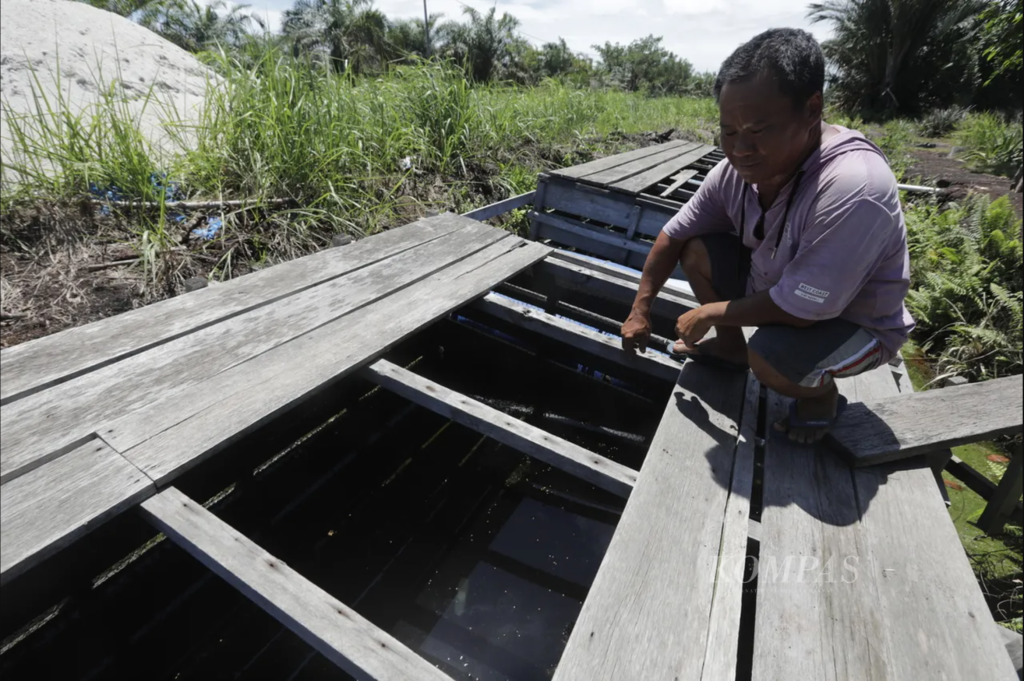
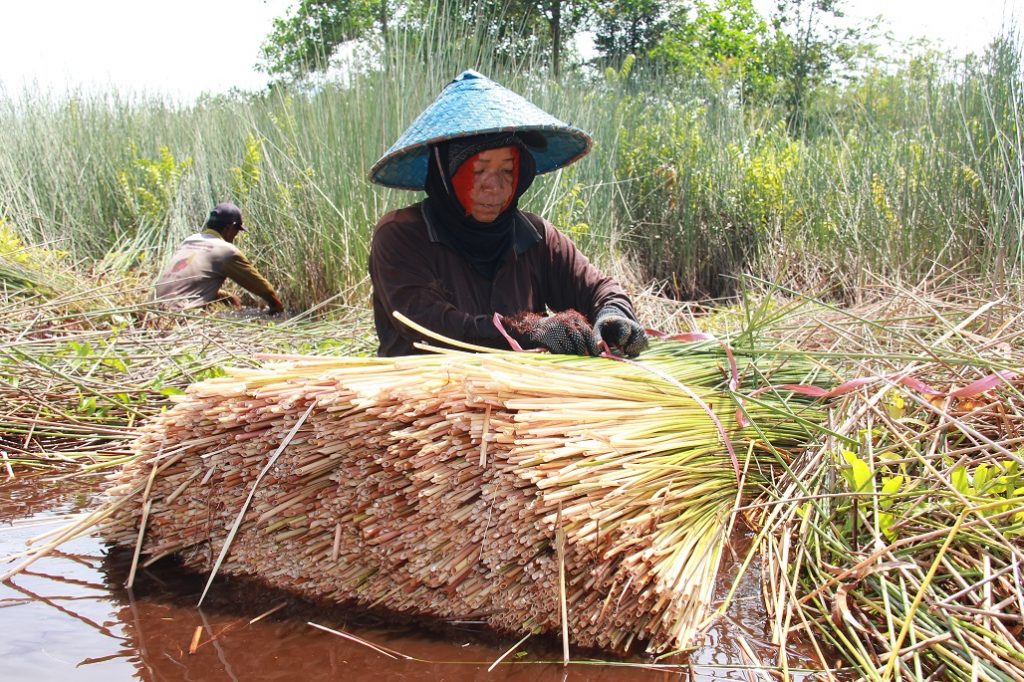
Central Kalimantan has several examples of peat-friendly livelihoods that produce plant-based commodities such as pineapple, rubber, rattan, and purun. In other peatland regions of Indonesia, such as in northern Sumatra, communities cultivate crops including sago palm and sorghum. These livelihoods depend on healthy peatland ecosystems and can contribute directly to their protection by generating economic value while maintaining peatland functions.
However, livelihood options should not be limited to commodities produced from a peatland environment. Another category is peat-neutral livelihoods—economic activities that benefit from the presence of healthy peatland ecosystems without extracting peatland resources or requiring the land to be drained or converted. Examples include swiftlet nest production, where specially constructed buildings provide nesting sites, and ecotourism, such as the one developed at the Sebangau Peat Forest Natural Laboratory (LAHG). Although these activities rely on intact peatland landscapes to remain viable, they have little direct impact on the peat itself. By creating income opportunities while keeping peatlands intact, peat-neutral livelihoods provide an economic incentive to conserve peat ecosystems. Revenue generated from these activities could also be reinvested in peatland restoration and long-term management, further strengthening conservation efforts.
The examples presented here demonstrate that sustainable livelihoods and peatland conservation are not competing objectives but can reinforce one another when designed around the ecological characteristics of peatlands. Whether through revegetation, blackwater fisheries, cultivation of peat-adapted crops, or peat-neutral enterprises such as ecotourism and swiftlet nest production, communities have diverse opportunities to benefit economically while maintaining healthy peat ecosystems. At the same time, no single livelihood model is universally applicable. Successful approaches must be adapted to local environmental conditions, community needs, market opportunities, and cultural practices.
Ultimately, the long-term protection of Indonesia’s peatlands depends not only on engineering interventions such as canal blocking or ecological restoration, but also on creating viable and lasting economic incentives for the people who live there. By placing local communities at the center of peatland management, livelihoods can become a powerful driver of restoration, ensuring that healthy peatlands remain both ecologically resilient and economically valuable for generations to come.
- Wijaya, R. (2021). Perusahaan masyarakat asal Siak menjadi finalis di kompetisi internasional. Lingkar Temu Kabupaten Lestari (LTKL). https://kabupatenlestari.org/artikel/perusahaan-masyarakat-asal-siak-menjadi-finalis-di-kompetisi-internasional/