


The Dayaks have practiced shifting agriculture using slash and burn methods since time immemorial. Even though there are laws in Kalimantan that ban burning of forests and farmland, farmers still clear their land with controlled burning. It is the fastest and the most cost effective way to clear land and fertilize it. But there are irreversible consequences in the long run if it is done on peatland. Akhmad Tamanuruddin, also known as Pak ‘Taman’, discovered that the hard way.
A Hard Lesson
He is known for successfully farming on peatland without burning. He grew up learning how to farm from his parents in Ngawi, East Java. In 1980, he transmigrated to Central Kalimantan with his wife and his child of 11 months. The first place he settled in had frequent flooding, so it was impossible to farm there. He moved to another place where he tried to grow seedlings he brought from Java and none of them grew because of the high acidity of the soil. He worked in Muara Teweh for four years before finally settling in the place where he lives until now, in Kalampangan, Palangka Raya. As it is, peatland is not suitable for intensive farming and Pak Taman realized that his land is not fertile. He observed that plants would grow better in an area that was recently burned. Hence, he tried burning his land for a while, which had short term benefits. Burning removes the topsoil, the part of the soil that is the most nutrient-rich, and it gradually causes the land to subside. The soil that is lost takes hundreds of years to recover. That was what happened to his land and it was his hardest lesson. He swore to never burn again.
Time and Tenacity
Pak Taman has three traits that pushed him to figure out how to farm on peatland. First, he was stubborn and tenacious. He tried everything with the resources that he had to make his land fertile. He did everything manually by himself. First, he tried applying dolomite and there was some improvement in the crops, but it wasn’t good enough for him. Then, one by one, he added cow manure and then mineral soil until he was satisfied. He observed the quality of his cassava crops. If they grew well, that meant the soil was fertile enough, since, according to him, cassava requires a lot of nutrients. His second trait is that he thinks far into the future and how his actions in the present will affect his descendants, the core theme of sustainability. Burning has immediate results, but the environmental costs in the future far outweigh them, which is why he fully regretted burning his land in the beginning. Lastly, Pak Taman manages his time very well. He worked at an elementary school, teaching religion, while working on his farm. Every morning, for thirty minutes, he did some work on his garden before heading to school. He was never late. He retired as a teacher in 2014.
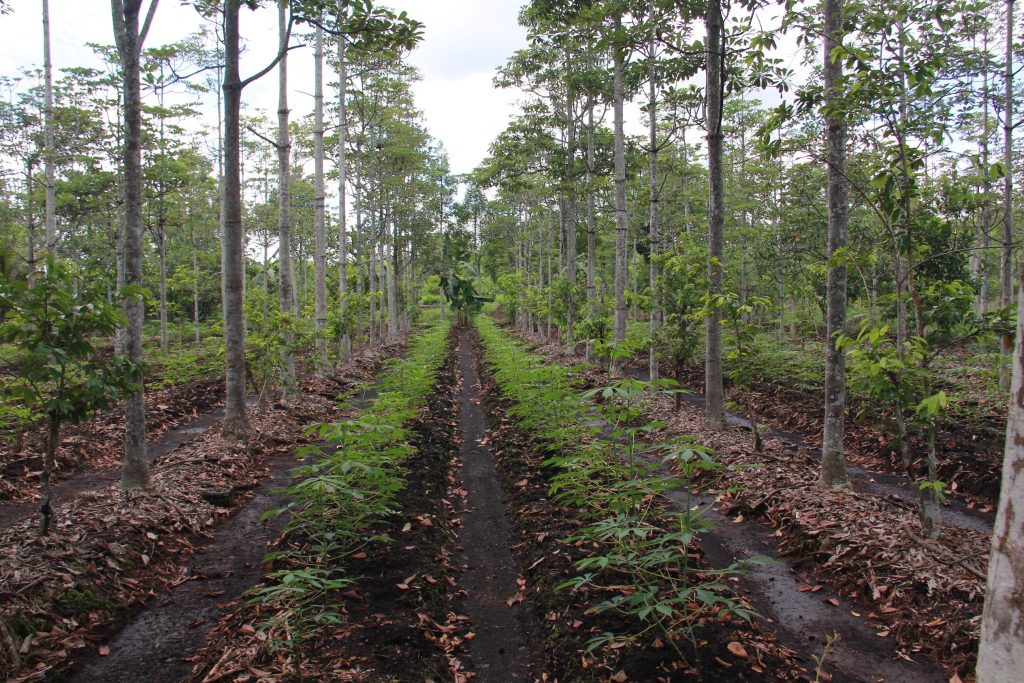
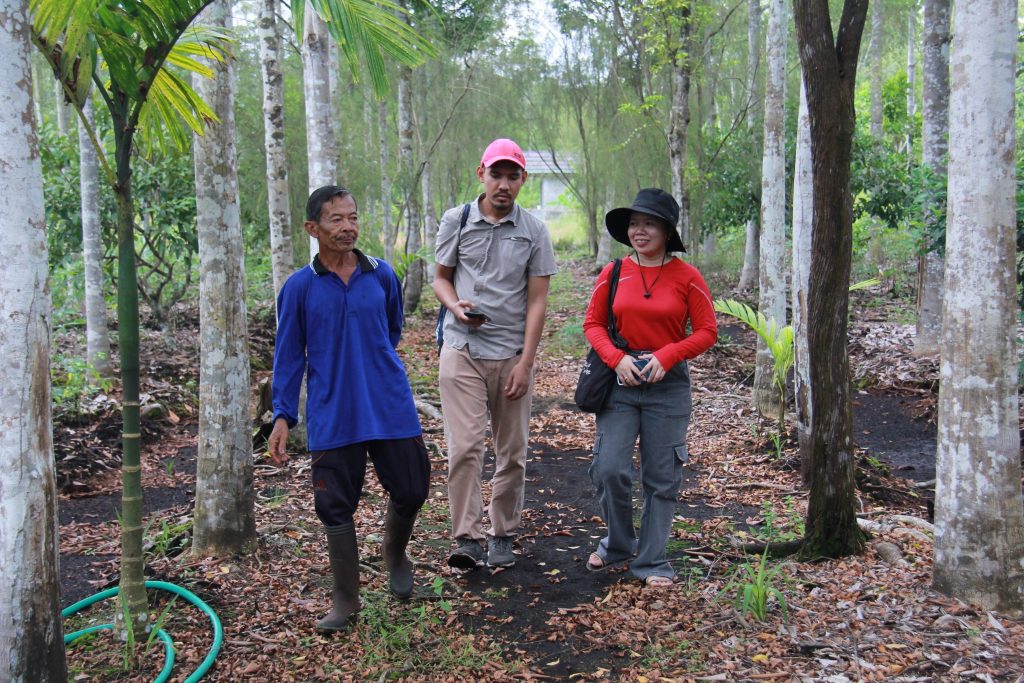
We walked through his garden in the late morning. The soil was soft, loose, dark and mossy. On his two-hectare land, Pak Taman grows cassava, chili, rambutan and bananas among other plants. Passing by the rows of 10-meter-high jelutung (Dyera spp.) trees, it felt like being in a forest. He started planting them in 2004 on Christmas Day (he remembers perfectly) and placed his crops between them, thus applying an agroforestry model where the trees would become the main product. The trees would give shade and intercept rainfall to the low-lying crops. He says that the trees and his crops support each other’s growth. His harvests that collectors buy would often have a surplus that he gave away to visitors. There are three drill wells that he uses to water the plants and to put out fires that spread to his land, which has happened in the past.
A Blessing
Pak Taman became renowned locally for his non-burning methods in 2009, but it wasn’t until 2016 that he began to have international exposure. One day, a man came unannounced to his farm. He immediately asked Pak Taman the question “Which one costs more, to burn or not to burn?”. Pak Taman had no clue who this man was and asked him to introduce himself. His name was Suprapto from the Ministry of Environment and Forestry. This was after the forest fires in 2015, when the government started to seriously address the issue. They heard Pak Taman is able to farm well without burning, so they sent Pak Suprapto to investigate. Pak Taman’s answer was simple: “My way is more expensive in the short term, but it is far cheaper than the environmental costs in the future that are incurred if you keep burning your land.” Pak Suprapto slowly hugged him, amazed by the simplicity and truth of the answer. From then on, farmers from all over Central Kalimantan would visit Pak Taman’s garden and learn from him. He was visited by foreigners from Latin America, Germany, Spain, ASEAN countries, Japan and Australia. He was invited to speak at several international seminars, one of them in Morocco. He is very grateful that people want to learn from him, which for him means that his knowledge is a blessing.
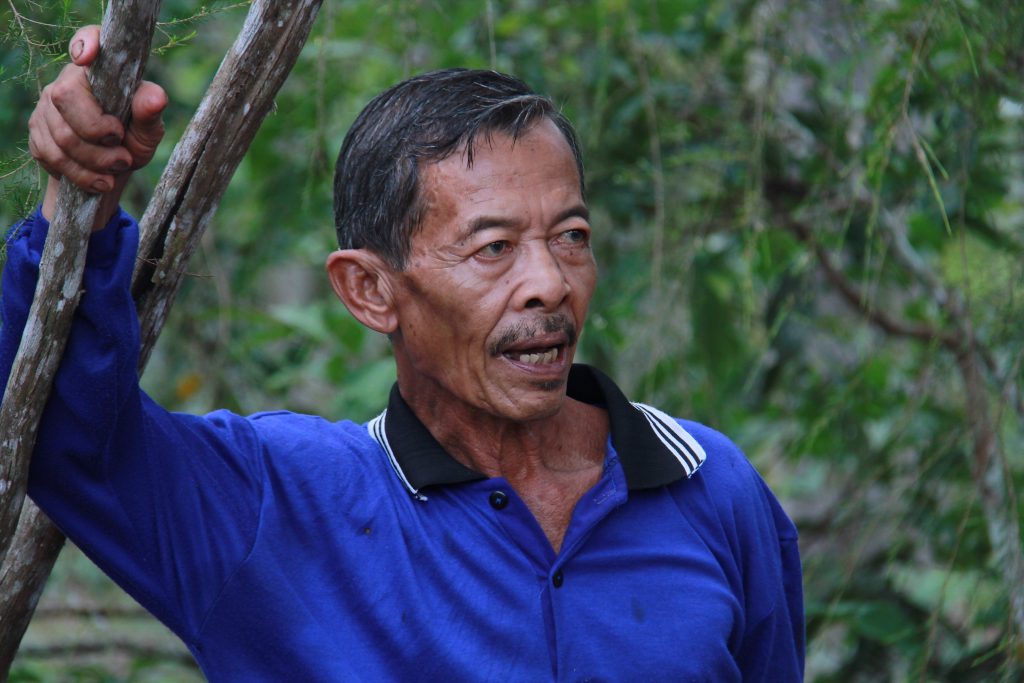
Pak Taman taught himself how to farm on peatland without burning. There isn’t a specific course on it that just anyone can learn. It took dedication and genuine care about the environment and future generations. He taught his farming neighbors about his method, but they did not apply it and continued to use fire to clear their land. Pak Taman mentioned several times to us that the ground on the farmland of his neighbors was lower than his, even up to half a meter. One of his neighbors failed to harvest the corn they were growing because of flooding due to the lower ground. That is the result of years of burning. We asked his opinion about the Dayaks who traditionally burn their land in shifting agriculture. “They continue to burn because of tradition, and the reason for that tradition has been lost in time and is probably outdated. There are good and bad aspects in a tradition. We should maintain the good ones and change the bad ones. Shifting agriculture actually takes more time and energy than permanent agriculture. There is also the greenhouse gas emissions from the fires. Whenever there is haze, the schools close down and, being a retired teacher, I do not condone anything that obstructs a child’s education, because they are our future leaders”.